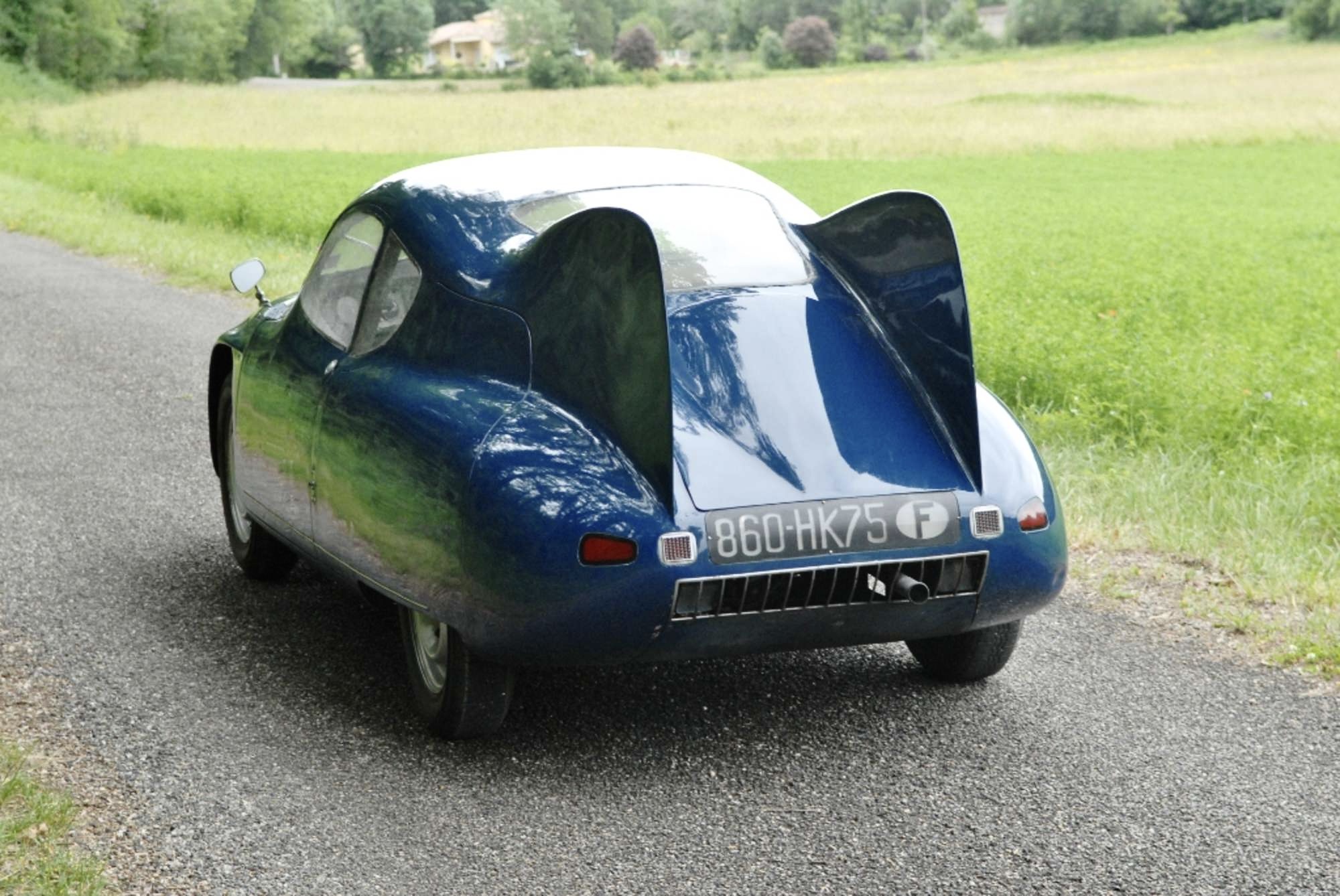
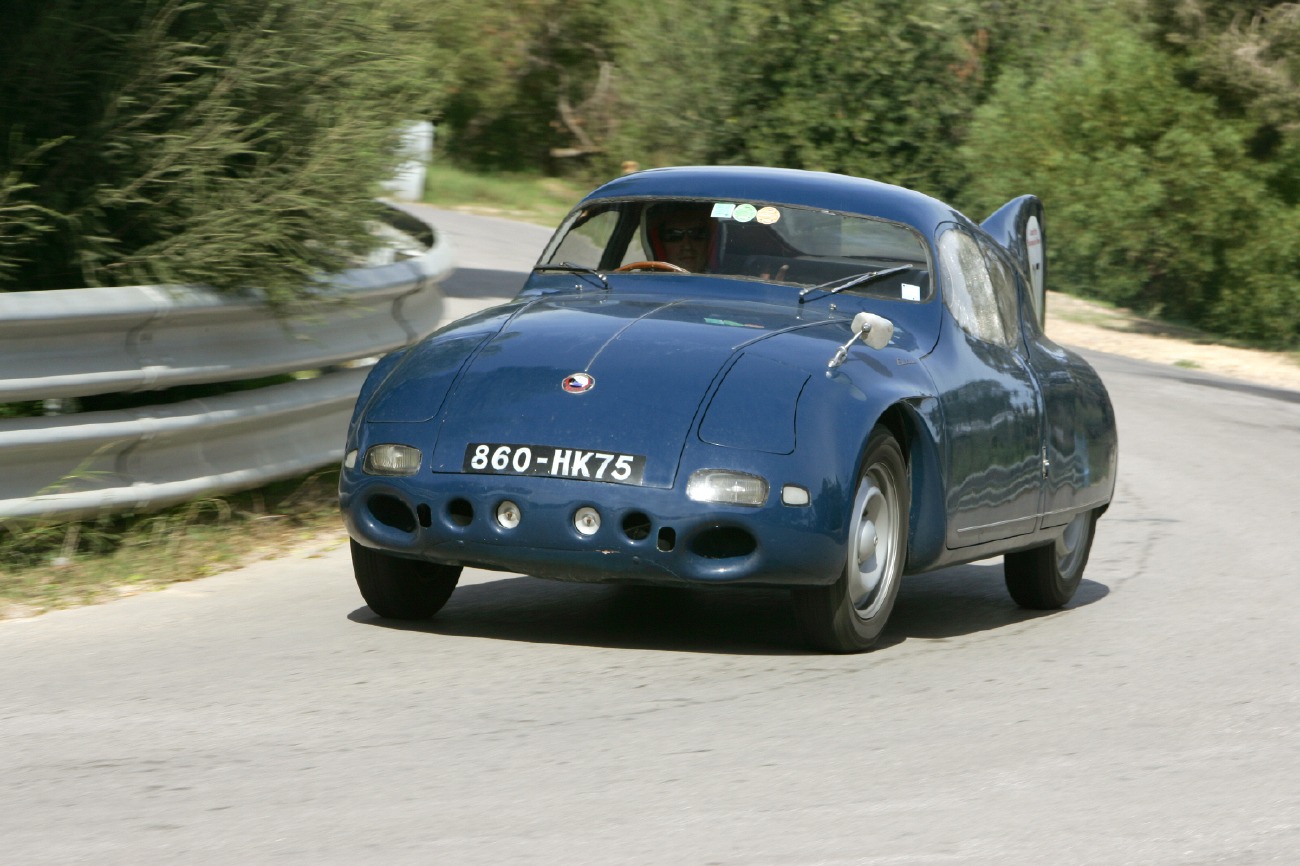
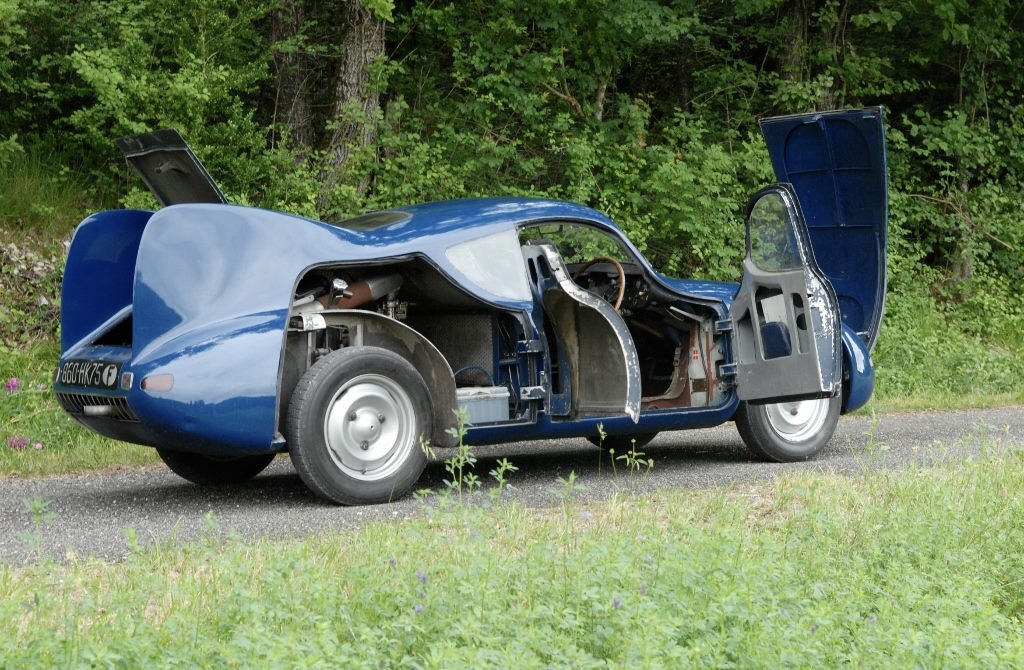
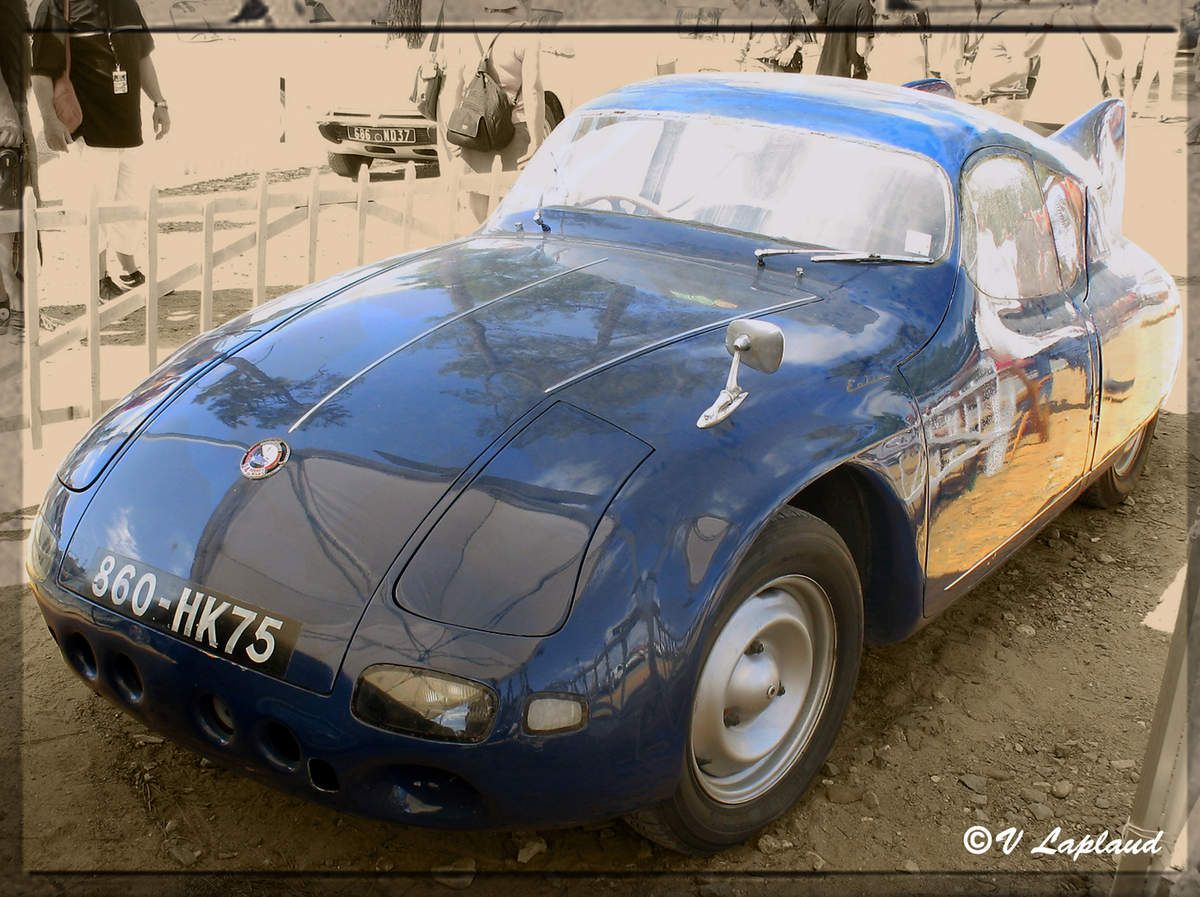
André Georges Claude—son of the renowned physicist Georges Claude, inventor of the neon light and liquid air, and himself a brilliant engineer—decided to build a brand-new, entirely French “customer-competition” racing car… an engineer’s flight of fancy, in short!
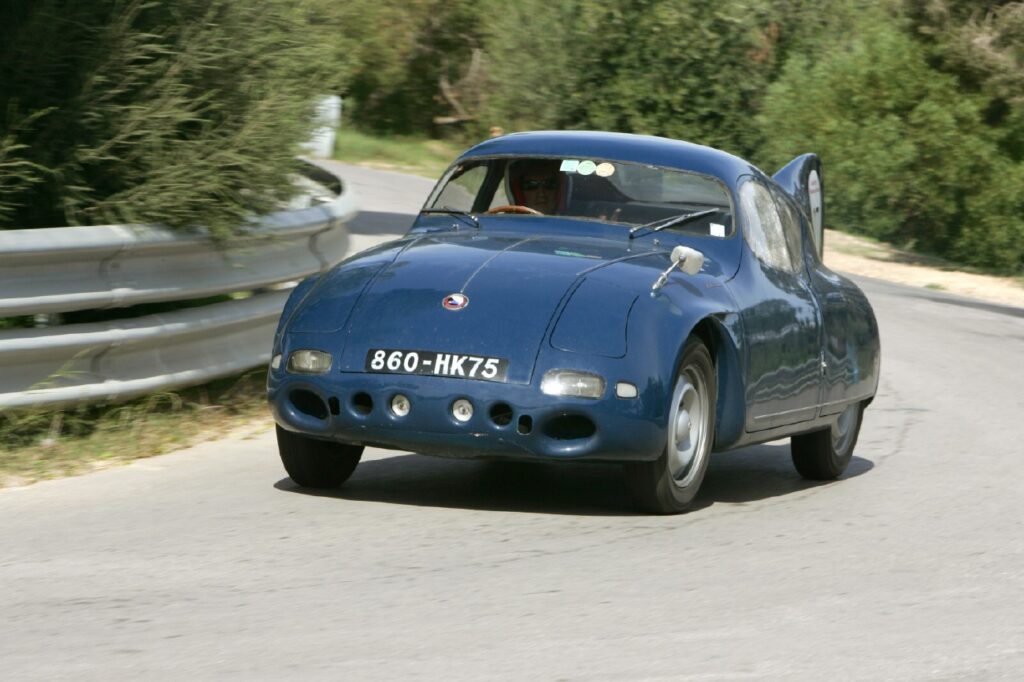
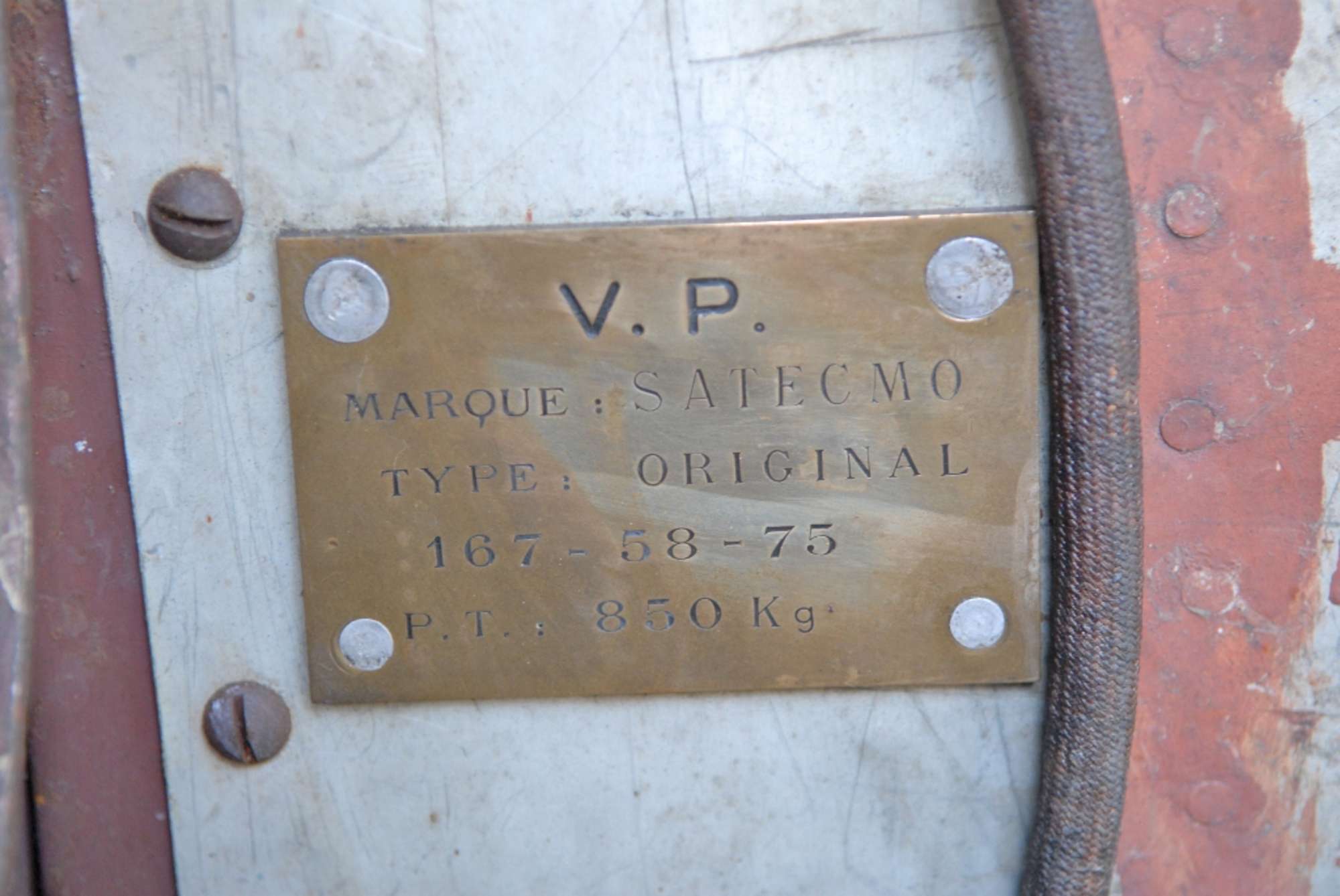
Indeed, as the head of SATECMO—a company specializing in the tuning of 4CV engines—and the designer of the famous 5-speed gearbox bearing his name (which equipped, among others, a great many Alpines—including the 4CV 1063, victorious at the 1954 Mille Miglia in the hands of Redele, and subsequently the A106 models)—André Georges Claude, having been disappointed by his experiences with the 4CV and bolstered by solid experience as a racing driver (including two entries in the 24 Hours of Le Mans, a victory in the Coupe des Alpes, and several appearances in the Tour de France Automobile), set about constructing his own racing car.
See our other photos in the gallery below; click on one image then scroll through.
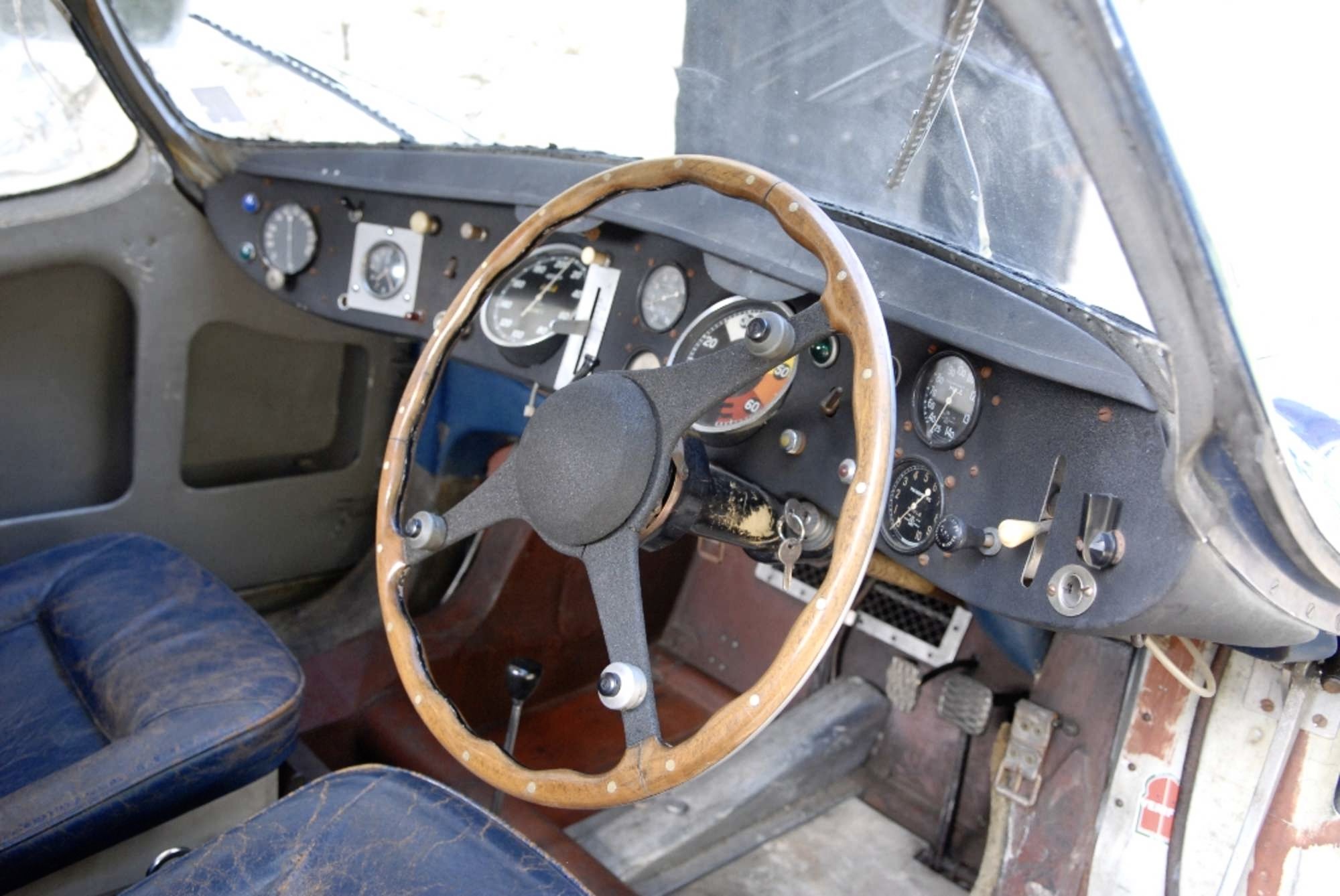
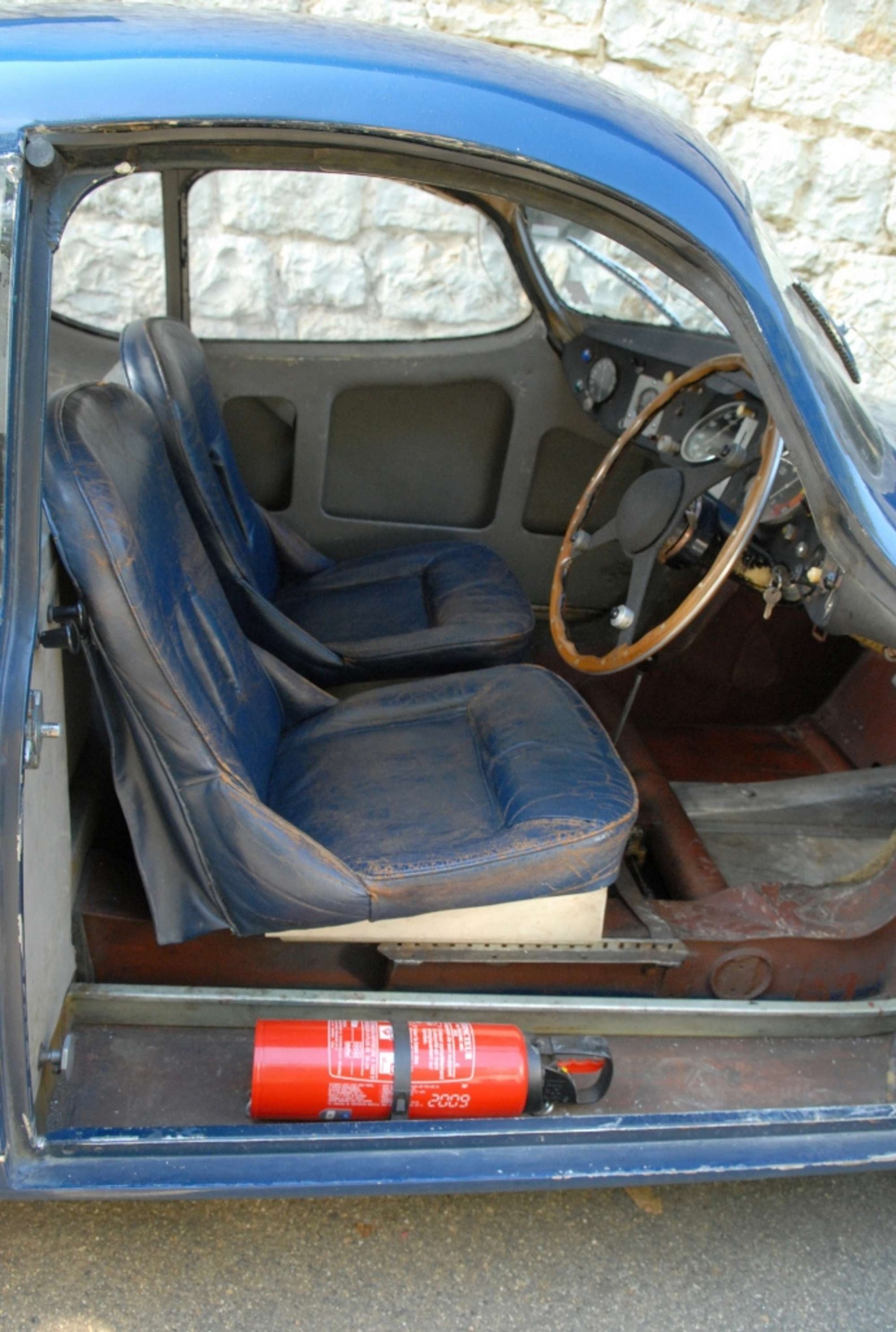
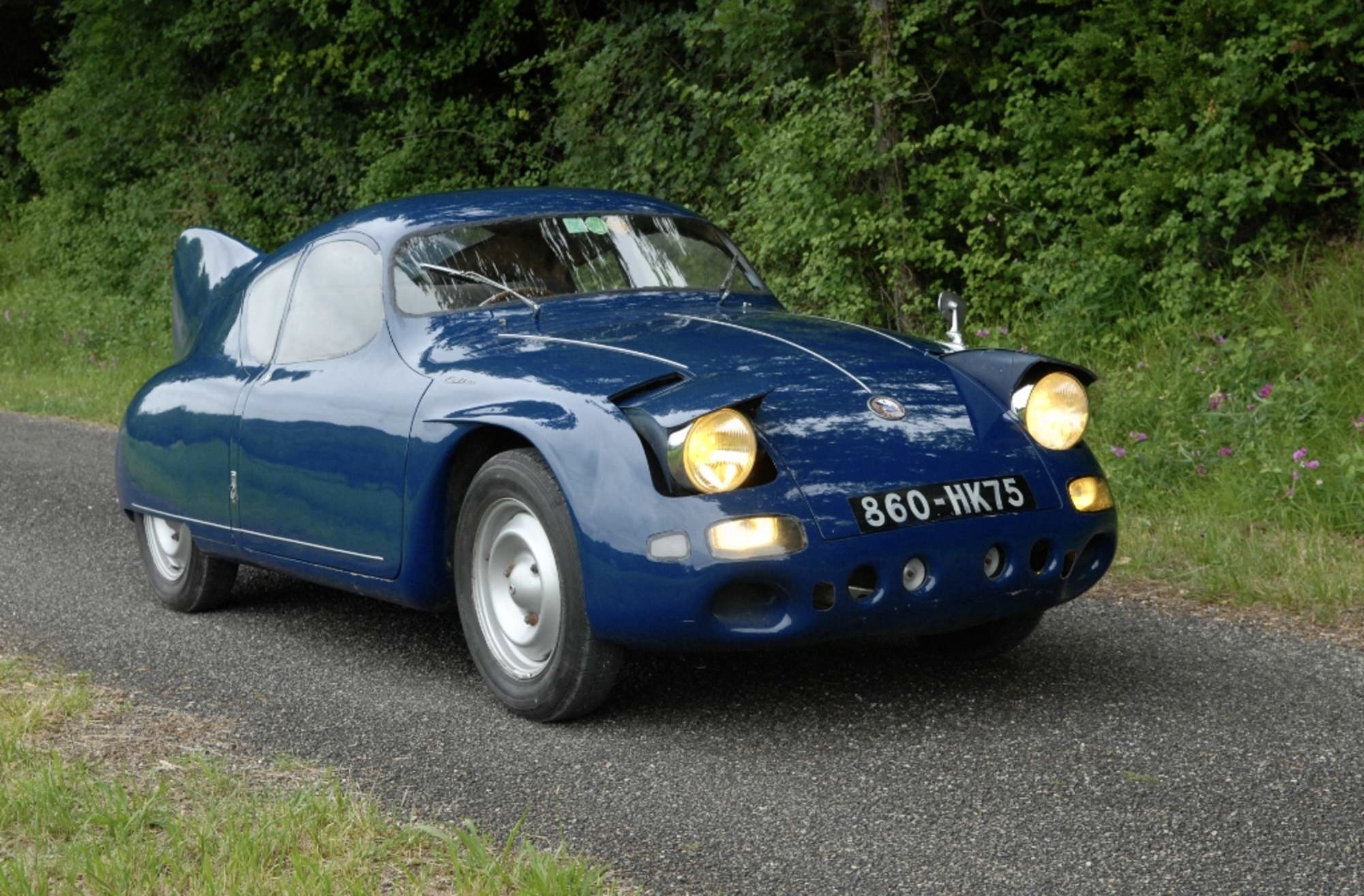
Completed in 1954, the car was not officially registered until 1958, under the license plate number 860 HK 75—a number it retains to this day. Its original engine was an 850 cc unit derived from the 4CV, but uprated to produce 75 hp at 7,500 rpm—thanks notably to a twin overhead camshaft setup; mounted in a mid-rear position, it was naturally mated to the famous Claude gearbox. Around 1960, the car was re-engined with a Dauphine Gordini 1093 unit “honed” by Mignotet; while this engine produced slightly less power—69 hp—it delivered it at a lower rev range (6,200 rpm), making the car more tractable and enjoyable to drive. Cooling is of the conventional water-cooled type; however, the chassis is a truly unique component—a bespoke, custom-built structure—much like the bodywork, which is crafted from magnesium welded under an argon atmosphere (following extensive aerodynamic profiling studies conducted in the Eiffel wind tunnels). The steering wheel is on the right (A.G. Claude was a man very sure of his ideas and held firm convictions regarding the advantages of right-hand drive); the gearshift lever is floor-mounted, and the 90-liter fuel tank is positioned at the front. The road holding is spectacular—as is the forward visibility.
The car was pitched to several French manufacturers with a view to limited-series production; photographs of the vehicle have even been discovered in the courtyard of the Porsche factory in Stuttgart. Be that as it may, the car remains a one-off.
This is the first French car Motor “returned” (ie the center position), at a time where all the engines were placed behind the rear axle, then, this design was adopted for the prototype and the one-seater cars.
We thank Tatiana Kantor of New York – for the page
Rolling Art on Facebook for these photos and the story.
See our other photos in the gallery below; click on one image then scroll through.