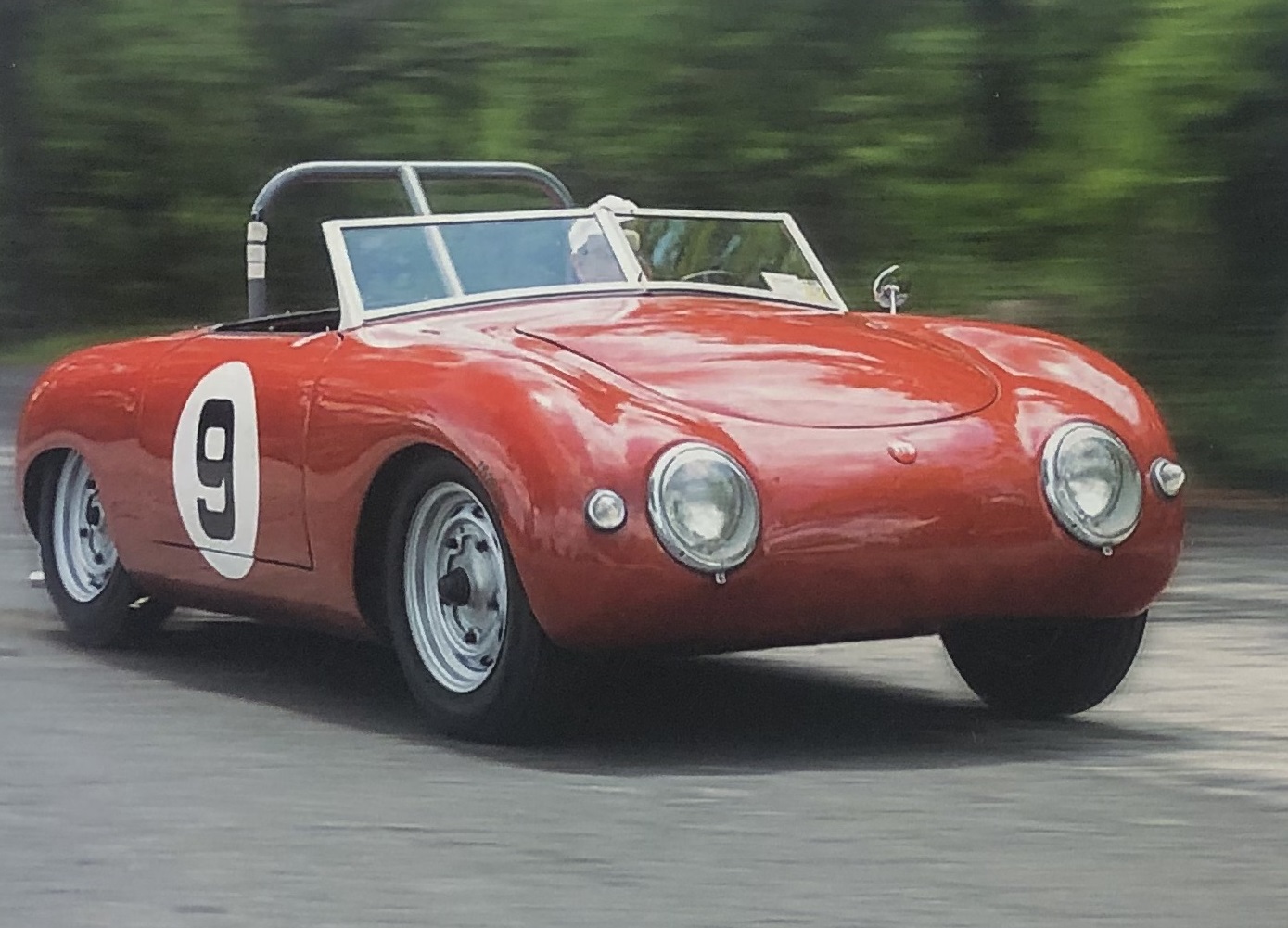
RARE & RAPID… Denzel sports cars are highly regarded for their lightweight, hand-built bodies and VW-based powertrains. Steve Schmidt’s Denzel 1300 got a Porsche 1500S engine and raced at the 1954 and 1955 Sebring 12 Hours. We are honored that he and the Denzel are one of the treasures racing with the Del Monte Trophy group.
Text reproduced from Excellence Magazine, December 2024, with our thanks. STORY BY PETER LINSKY. PHOTOS BY PETER WU, STEVE SCHMIDT, OZZE LYONS AND COURTESY THE TOLAND COLLECTION
“THE PERFECT CAR for competition or normal driving”. So read an undated (probably late 1950s) “News bulletin No.1” on the letterhead of Globe Automotive Imports of Montgomery, New York. Global announced its appointment as America’s exclusive East Coast distributor for Denzel sports cars. Global appears to have been associated with Frank Wagonhofer, a German-born businessman who opened a Volkswagen franchise in Montgomery and is known to have sold at least two Denzel sports cars in the late 1950s. The Globe ad waxed rhapsodic about all the desirable features of the Denzel 1300 Super Sport convertible. “Designed, built, and engineered by Wolfgang Denzel of Vienna, Austria. This unique sports car should offer stiff competition on the sports car circuits in 1959.” In fact, that was already the case.
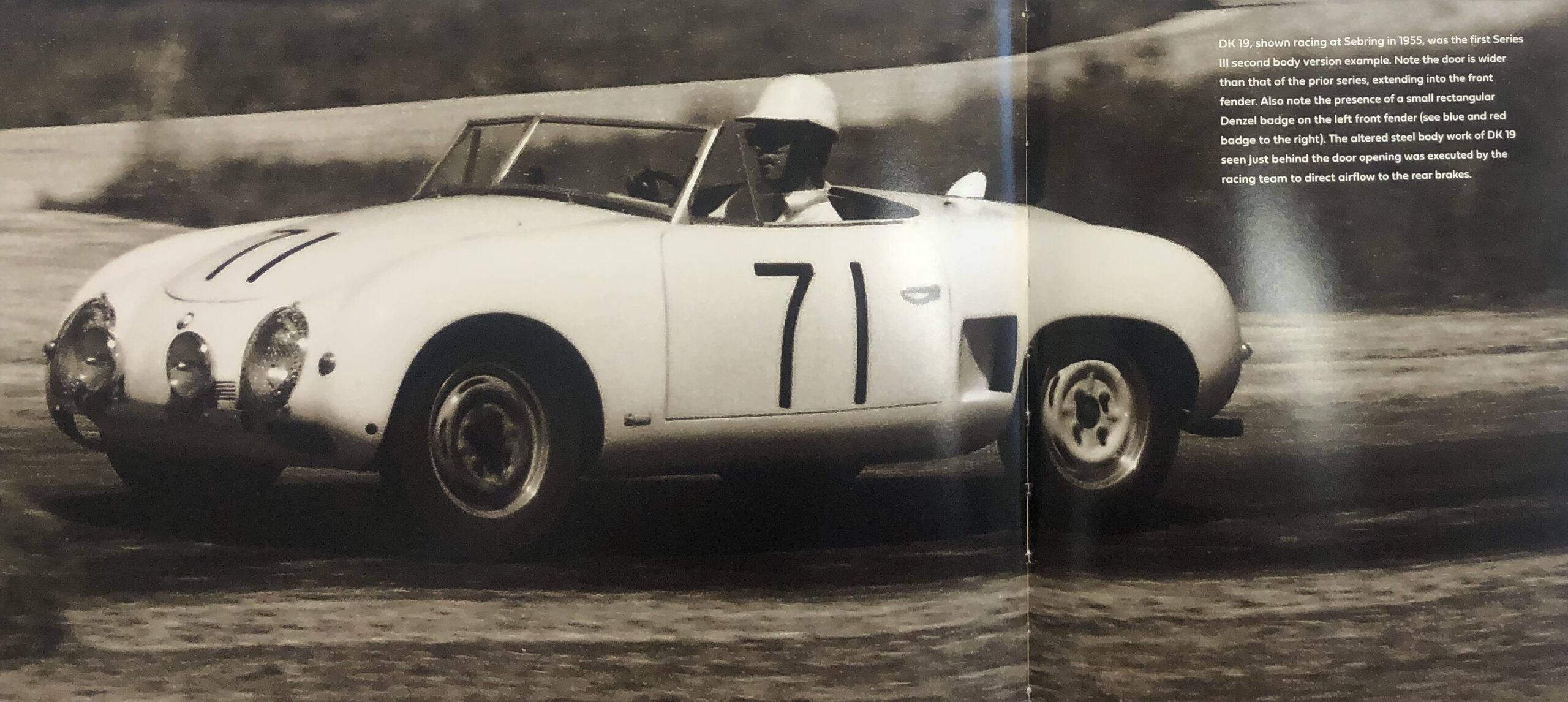
A fellow Austrian and immigrant to America named Otto Linton had been offering Denzel-designed, VW-based racing equipment through his Speed Craft Enterprises shop in Exton, Pennsylvania, and then, beginning around 1952, complete Denzel sports cars. On these pages, we offer a closer look at the very first Denzel to race in the United States, DK19, a Series III chassis from 1953 and one of two known to have been sold by Linton.
Denzel History. For more background on this intriguing marque, we are indebted to long-time PCA member and Denzel expert Jim Perrin and his co-author Mark Brinker for their recently published two-volume “The Amazing Denzel Sports Car”. [Ed: Mark Brinker is in late 2025 working hard on his upcoming history of the Pebble Beach Road Races.] Perrin, a serious collector, had spent decades researching the marque’s short but impressive history. He has owned the last factory-completed car, chassis #160, for about 20 years, during which it was fully restored to show-winning condition. Brinker, also a dedicated researcher and writer, joined the book project a few years ago after buying #148 from Perrin and having it restored.
When it came to numbering his chassis, Wolfgang Denzel appears to have played games, much as Ferdinand Porsche did with project numbers in his firm’s earliest days. Chassis numbers notwithstanding, only 62 Denzels are known to have been completed between 1948 and 1960, with most staying in Europe. Hence, they are little-known and rarely seen in America. After building 41 sequentially-numbered cars, Denzel jumped ahead to number 142, perhaps because he wanted to impress observers with the perceived number he had built.
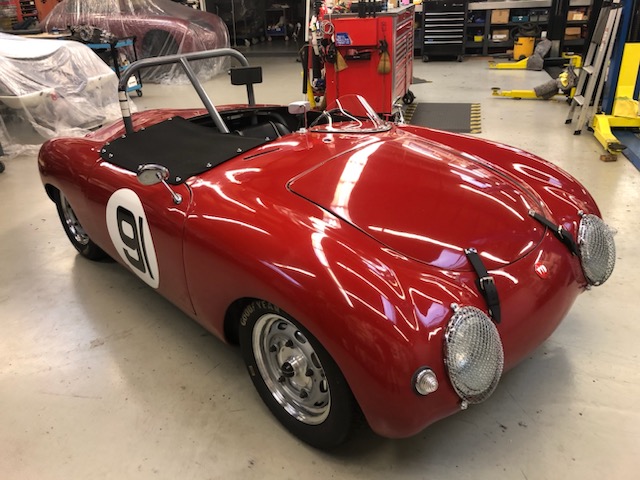
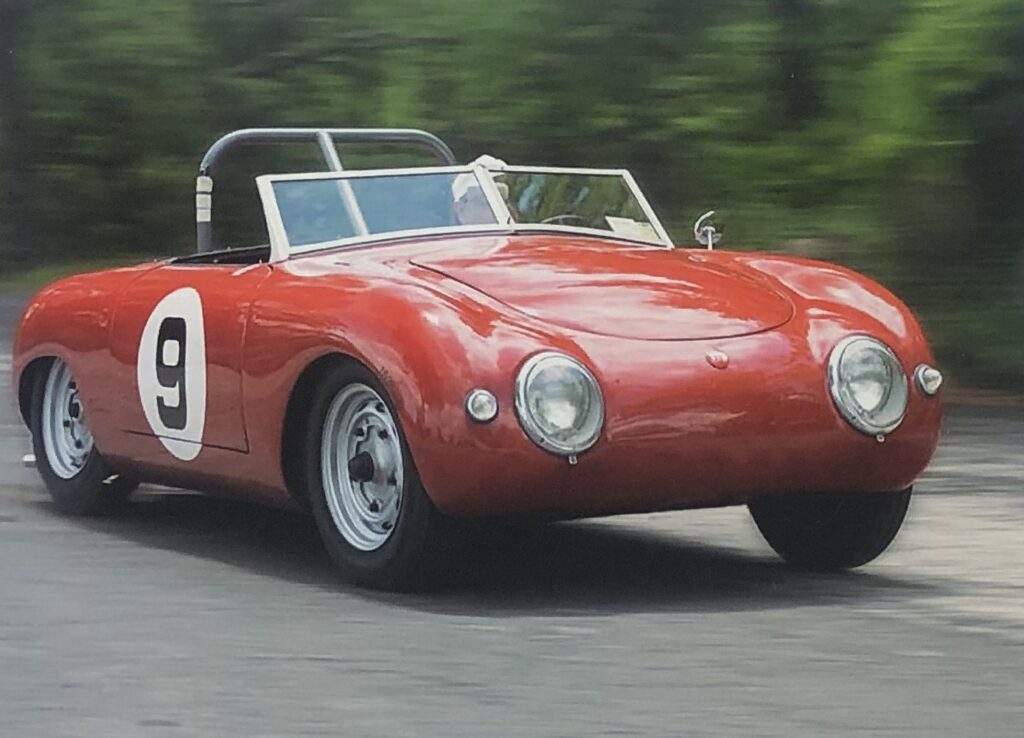
The Denzel’s most notable visual feature was its headlight placement, low in the sloping nose, immediately reminding of VW, Glockler, and Porsche. Although details would vary from car to car as production moved forward, Series II examples would include small oval or rectangular horn grilles on their nose panels or fenders. When Series III appeared, small single turn signal lamps near the head- lights had replaced the old-style trafficators. The shapely tail most often had a pair of red stop and turn-signal lamps on each side. Engine cooling was provided via thin transverse ventilating slits behind the cockpit.
Globe’s basic description of the Denzel 1300 was intriguing: “A tubular frame clothed in a hand-hammered aluminum body, the car weight is a mear (sic) 1386 lbs.” The specifications mentioned “a four-cylinder air-cooled engine, 78mm bore by 67 mm stroke, with 8.5 compression, 75 SAE horsepower.” The engine was mounted in the tail. All the preceding should sound familiar to VW and 356 enthusiasts. The description went on to note an 81.7-inch wheelbase with a 51-inch track. The body measured 143 inches end- to-end and was just 47 inches tall, presumably with the folding convertible top raised.
These Denzels were well-equipped for the day, with roll-up windows and a split-cushion one-plus-two bench seat. A Globe price sheet dated August 20th, 1958 lists base prices ranging from $4,295 (about $47,300 after adjusting for inflation to 2024 dollars) for a 1300 Sport Roadster and $4,552 ($50,100 today) for a 1300 Super Sport Roadster. Sport Coupes were priced at $4,552 for the standard version and $4,824 ($53,100 in 2024) for the Super Sport.
The term “Coupe” is a bit misleading, as it actually referred to an attractive, removable hardtop. Five “Coupes” were sold; one is currently under restoration in Austria. None of the actual hardtops are known to survive, so we don’t know whether they were metal or plastic. Per the Globe memo, Denzels could be ordered in Black, White, Red, or Blue. Optional at extra cost were a tonneau cover, “Special paint”, a “Special steering wheel” and “Special brakes”. Denzels were comparatively expensive compared to their market rivals, and it’s probably a major factor in why so few were sold.
As a youngster, Wolfgang Denzel was fascinated by everything mechanical and built his own racing bicycles. By the time he was in his early 20s, he’d built a racing motorcycle, which brought enough success that he bought a BMW bike and began racking up impressive performances. He eventually became one of Europe’s top competition riders and continued to race well into his 40s. Perrin and Brinker write that Denzel’s close relationship with BMW likely saved that company’s fortunes after the war, as he was the impetus behind the popular little 700 sports car and had a profound influence on BMW’s product line.
Around 1948, this multi-talented Austrian decided to build a small sports car under his own name. These earliest Denzels used VW engines, transaxles, and independent suspensions, mostly salvaged from surplus German army Kübelwagens. Denzel’s earliest cars used VW brakes and steel wheels, but he soon switched to Fiat hydraulic brakes and Borrani wheels with steel centers and alloy rims. This was well before Porsche adopted the same idea for its Spyders. Denzel used telescopic shocks and adapted travel-limiting cables to the rear axles to reduce excessive positive camber.
Although factory records no longer exist, Perrin says there were three series of Denzels. Series I cars, of which there were six, were labeled “VW WD Equipment” and built from 1948 to 1950. These were longer-wheelbase (94.5 inches) and wore what Perrin calls “plastic” bodywork over their steel VW floorpans. Others describe it as vinyl-wrapped wood. A combination of square and round steel tubing reinforced the floorpans. While there are many photographs, none of these cars survive, so we don’t know what material was used.
The first two lacked doors; the next four had steel doors. A few offered a back seat. The long-wheelbase cars appeared a bit out of proportion, but that would be remedied with Denzel’s Series II, now called “WD Sport”. Five steel-bodied cars were constructed between 1949 and 1951. Three were long-wheelbase, but the other two were short-wheelbase (82.7-inch) prototypes that incorporated a more compact and attractive steel body with aluminum trunk and engine lids. All Denzels to this point had two-piece flat-glass windshields.
Series III Denzels arrived in 1952. All 51 examples were short-wheelbase on a Denzel chassis, and there were three body versions. The first seven were built in steel, and the next 11 in aluminum. Finally, the third batch of 18 was also alloy-skinned and introduced a one- piece curved windscreen. These small production numbers precluded buying expensive dies, so his cars were essentially all hand-built, another factor in his pricing. 1955 saw the introduction of the Denzel 1300 and 1300 Serien Super, which continued through 1960. The Denzel 1500 appeared in 1955.
Boasting a good horsepower-to-weight ratio, Denzel’s little 1,300cc VW-powered machines with hotter cam and dual carbs were successful right out of the box. Denzel himself claimed victory with his first car in the 1949 Austrian Alpine Rally. Denzels won or placed well in dozens of European hill-climbs, rallies, and races, where their excellent handling and light weight often found them finishing ahead of Porsches. Their reputation for fine engineering and high quality soon attracted a great deal of interest, if not clients.
Along the way, Denzel busied himself with coaxing more power and reliability from his VW-based powerplants to meet customer demands. He adopted full-flow oil filtering-again pre-dating Porsche. By 1954, Denzel was producing his own dual-port cylinder heads. Denzel offered his own stronger billet stroker crankshafts and other higher-spec engine internals. Soon, Denzel’s engines were producing over 70 reliable horsepower, and he offered kits through VW dealers.
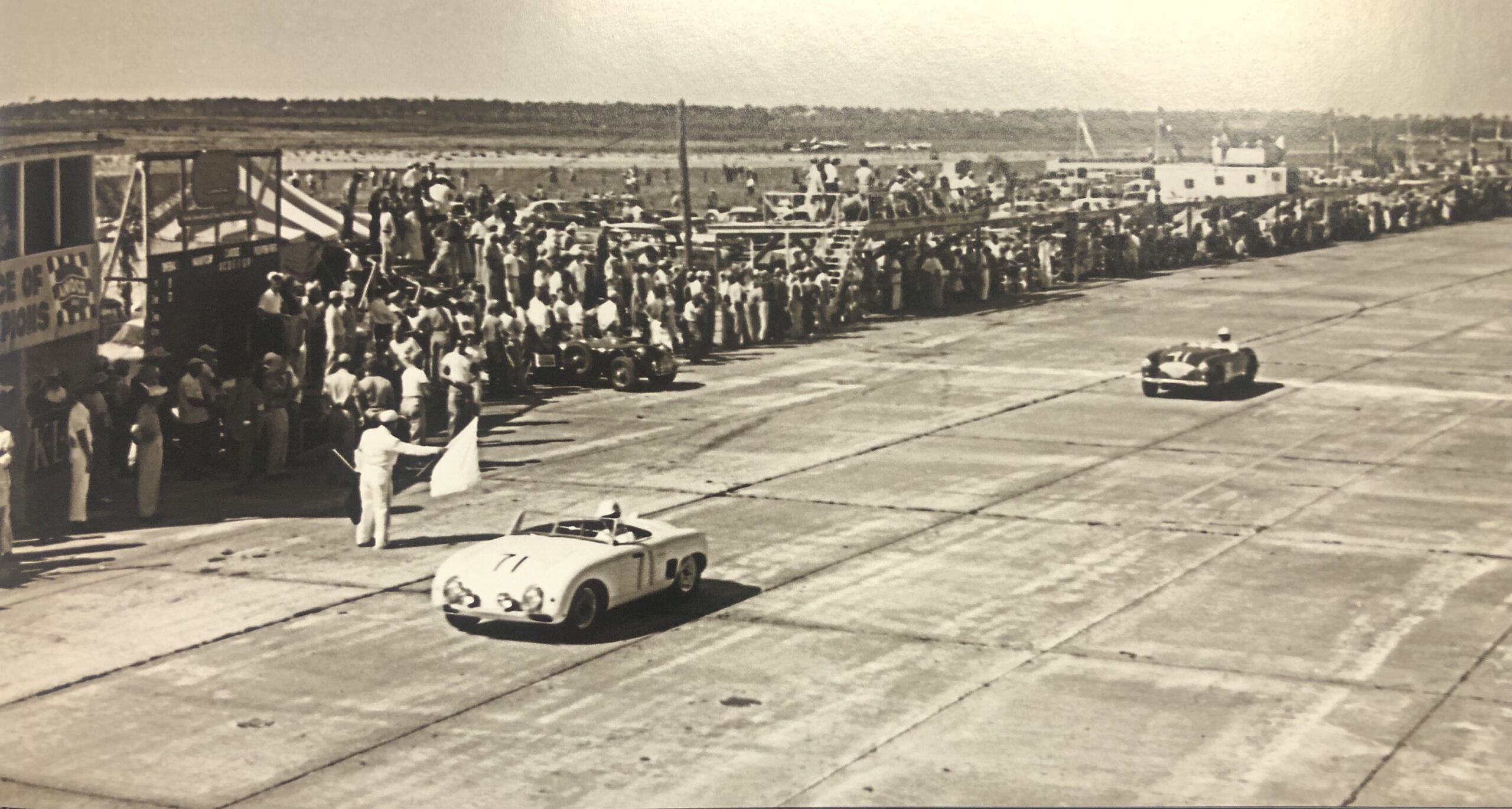
U.S. Market. Denzel also looked abroad for new customers; the VW-smitten U.S. market began to demand high-performance engine parts, and he thought his little sports cars might do well here. Early on, Otto Linton obtained a Denzel franchise. Linton was a skilled and aspiring amateur racer and would eventually enter Sebring 11 times with various sports cars In early 1953, Linton took delivery of two new Denzel 1300s, chassis DK19 and DK21. DK19—our feature car—was the first Series III built. It was purchased by Richard Toland, a young racing enthusiast from a well-to-do Pennsylvania family. In 1953, Toland obtained one of the first East Coast VW franchises, first named International Motor Company and later West German Imports, located in an affluent Philadelphia suburb.
A bit of subterfuge was necessary to get this potent little Austrian racer onto the starting grid of the 1954 Sebring 12 hours. When Perrin interviewed Toland, he learned that Toland had planned to bring along a young mechanic named Walter “Bud” Huggler as his co-driver, but Huggler was underage, according to the Sebring rule-book. Instead, another friend, Charles Devaney, was entered. Although he didn’t drive, Devaney’s name remains in the official records; Huggler got the ride, and nobody was the wiser. Toland and Huggler finished sixth among 20 entries in the up-to-1,500cc Sport class and an impressive 12th overall. Toland returned to Sebring again the following year but came up short, as he and co-drivers Howard Hanna and Stan Hoffstein failed to finish.

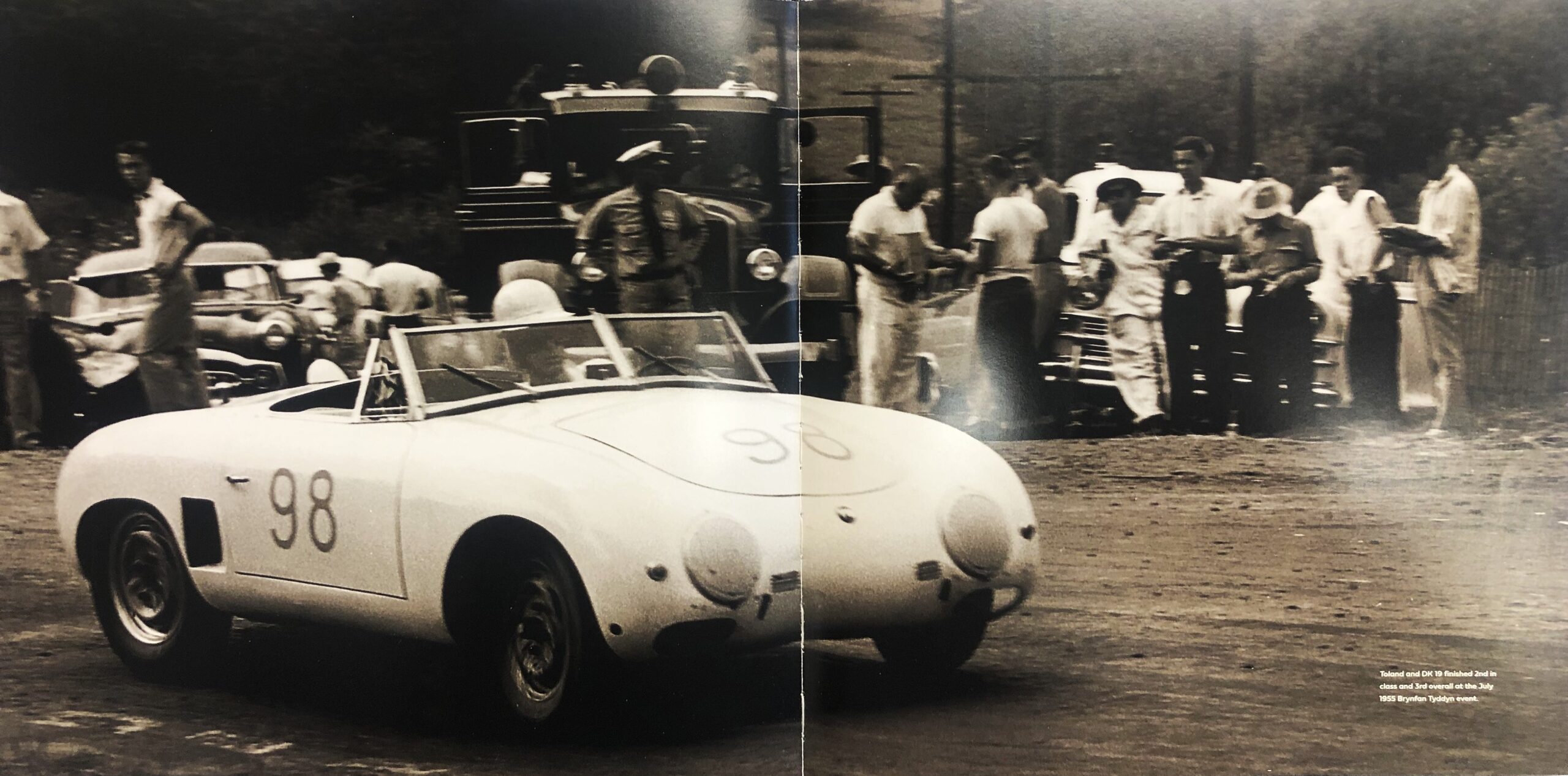
Toland raced his Denzel a total of 10 times. In mid-May 1955, he ran the Cumberland, Maryland SCCA Nationals, winning the G-Modified class and placing sixth overall in his race group. Toland ran both a Preliminary and a National race over the July 4th ‘62 weekend at Beverly, Massachusetts, finishing third in class and eighth overall, then second in class (11th overall), respectively. Toland took a good second place in G-Mod and third overall at Brynfan Tyddyn, Pennsylvania on July 23rd. He was seventh in class and 13th overall at Fairchild Air Force Base in Maryland to close out the season. The following year, 1956, Toland again raced at Cumberland, batting to an 11th place finish both overall and in G-Modified. Toland also ran several hill-climbs.
| 1953 Denzel 1300 (Chassis #DK19) STOCK / MODIFIED Drive Rear-wheel drive Layout Rear-engine Wheelbase 827 inches Engine 1.34-liter VW flatfour / 1.5-liter Porsche flat-four | Transmission 4-speed manual Horsepower 75/81 hp. Torque 71/79 lb-ft Weight 1322 bs Pounds Per HP 17.6/16.3 lbs/hp 0.60 mph 11.5710 sec. (est.) Top Speed 96/105 mph |
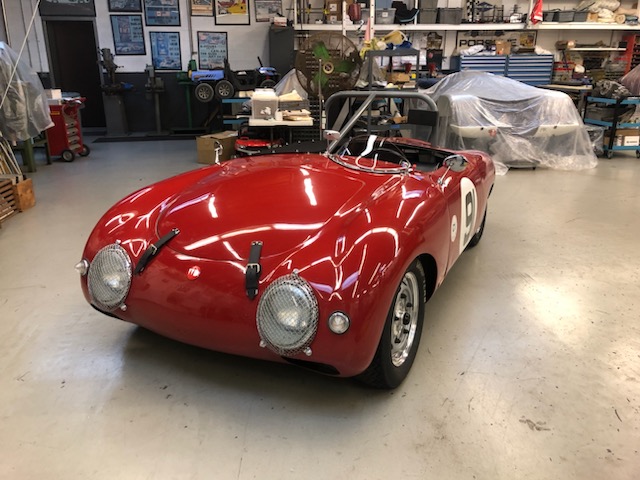
By the mid-1960s, the car’s ownership had changed numerous times but remained in the Northeast. In 1982 it was acquired by William Haupt, a collector and German car repair shop owner in Harriman, New York. It was subsequently damaged in a barn fire. While being repaired, the side vents were filled and it was discovered that the car had been painted several different colors. Haupt resprayed the car red and installed a roll-over bar. He too frequently ran the Denzel in vintage events and hill-climbs, including the historic 5.2-mile Mt. Equinox. On his passing, the car was left to his son, Bill Junior, who was also an avid collector.
Steve Schmidt, a well-known Southern California vintage Porsche racer, was looking to add a 550 Spyder to his stable and asked his good friend Ibraham Kuzu, a Texas enthusiast and broker, for guidance. Kuzu knew that Bill Junior had a 550 that might be for sale (see: Excellence #312), but it was beyond Steve’s budget. The younger Haupt also owned an early Denzel with a documented history, but it wasn’t for sale. Schmidt called another friend in the 356 community, also known to be a Denzel enthusiast—Jim Perrin, who was awaiting publication of his new book. Perrin gave Schmidt a basic primer on Denzels, including how often they outran Porsche competitors. Schmidt was stunned to learn that the Denzel weighed over 300 pounds less than his larger-engined 336 Speedster in legal race trim, although they often ran in different classes. Schmidt came back with an offer, and the Denzel found a new home.
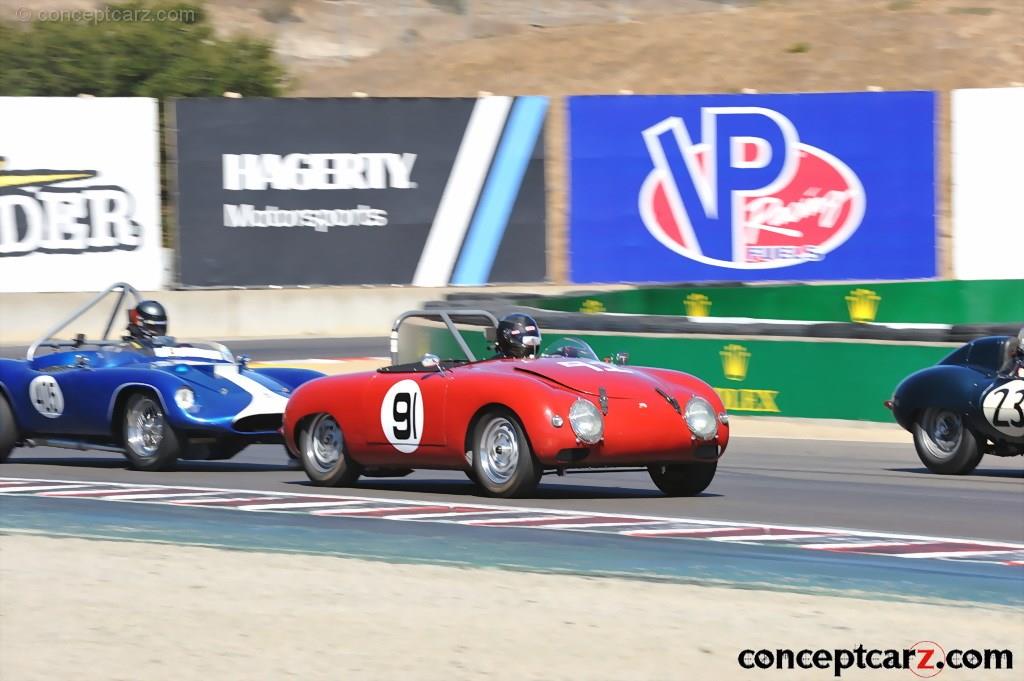
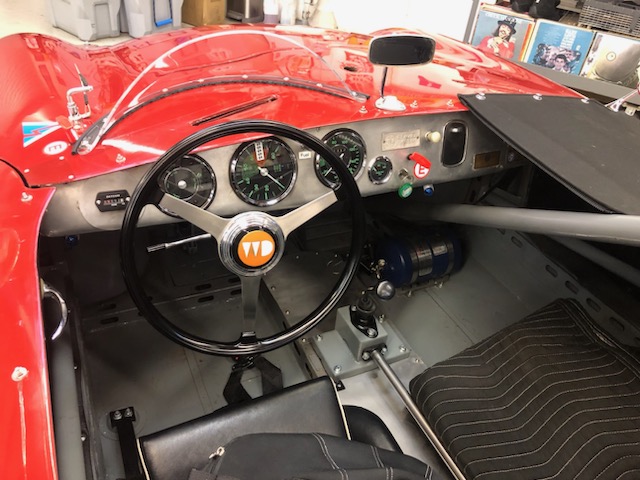
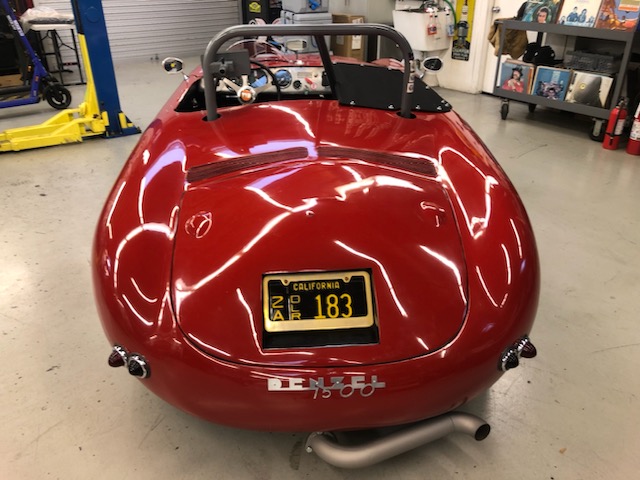
Schmidt immediately set to work preparing DK19 for the 2024 Monterey Motorsports Reunion. When received, it bore a non-original “Denzel 1500” badge on the tail. Says Schmidt, “It had been fitted earlier with early Porsche drum brakes, a Porsche 356 engine, and Type 1 VW transaxle, as the split-case VW crash box was long gone. In ‘54, more than likely, it would have been the earliest of three-piece-case 1500S engines (Roller crank, etc.) due to his wanting the latest, highest horsepower engine.” Schmidt sourced another correct 1500S engine and rebuilt it, along with its sand-cast 40-mm Solex twin-choke carbs, transmission, and brakes. He re-opened those vent holes in the nose to feed a pair of oil coolers. Schmidt says the side vents will be recreated when the car is repainted in its original white Sebring livery. By the summer of 2024, the Denzel was ready to race again. After a track test at the Thermal Club near Palm Springs, it headed north to Monterey, where it ran in the Rolex Motorsports Reunion and was well-received.
By 1960, Wolfgang Denzel was spending ‘more of his time at BMW and less with his own cars. Unable to compete in volume or price point with the Porsches his cars so often beat, Denzel closed his shop. Perhaps 30 Denzels are known to survive, 10 of them in the U.S. including Richard Toland’s fierce little Sebring racer.
Click on an image to enlarge, and browse the gallery…