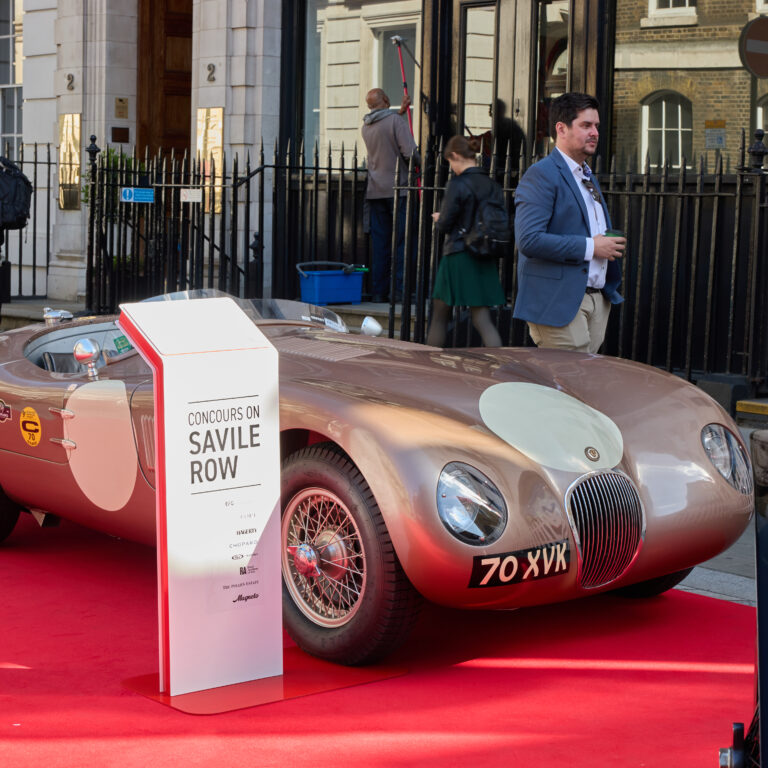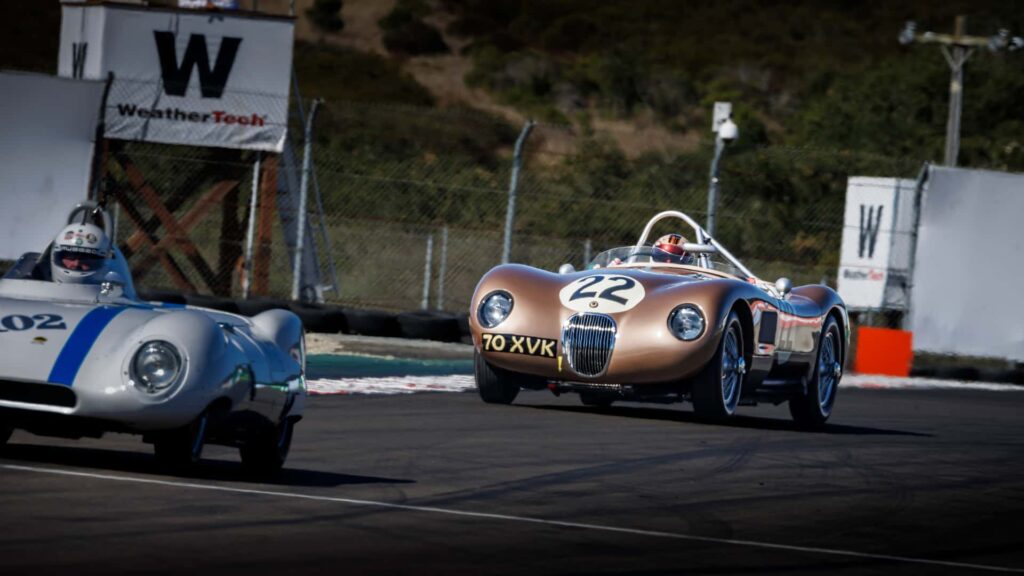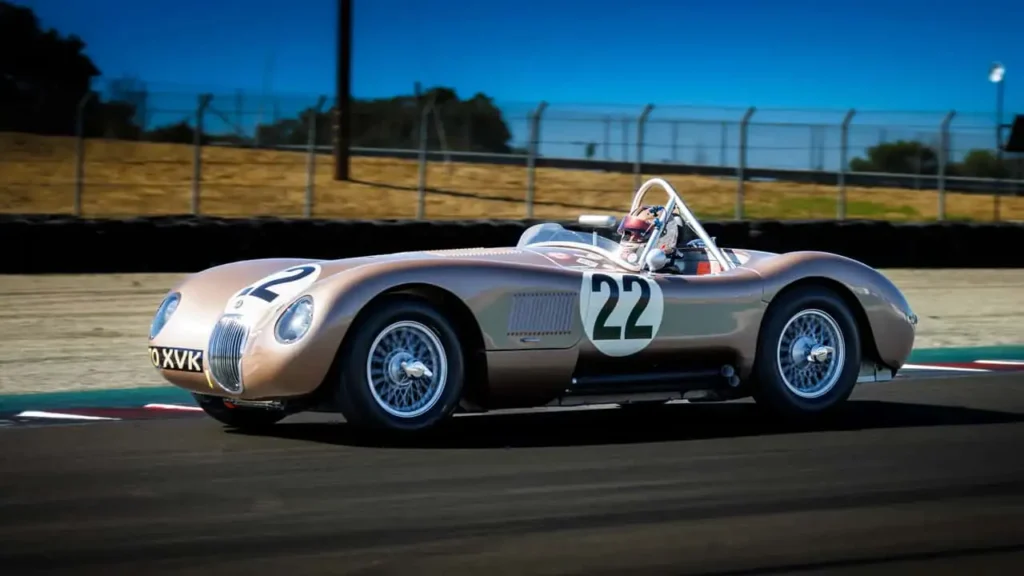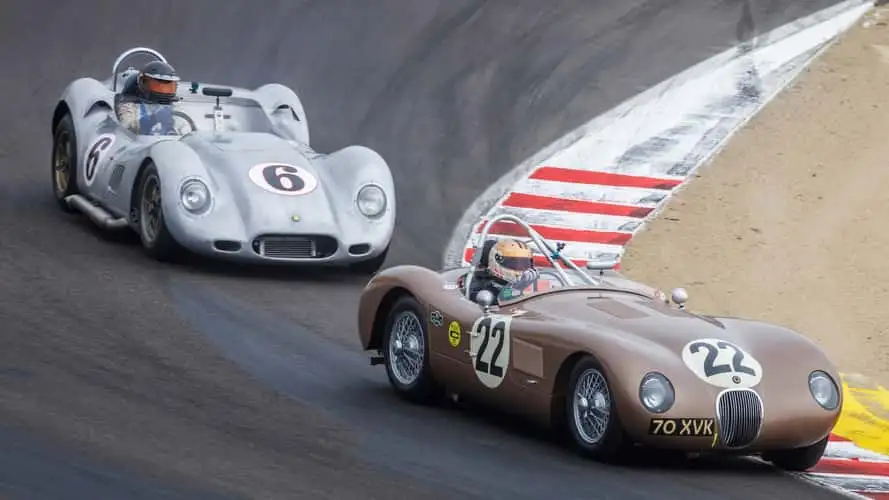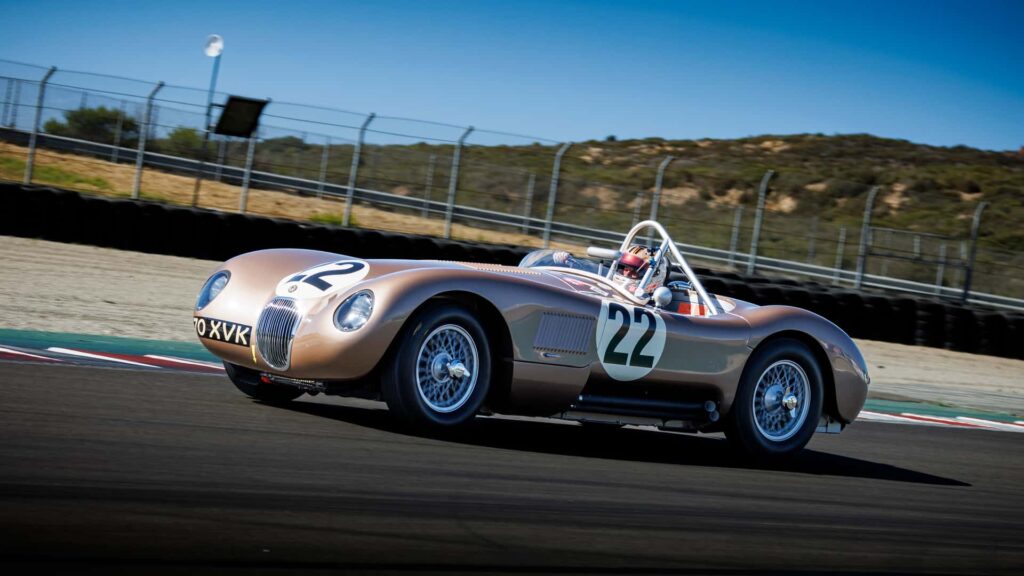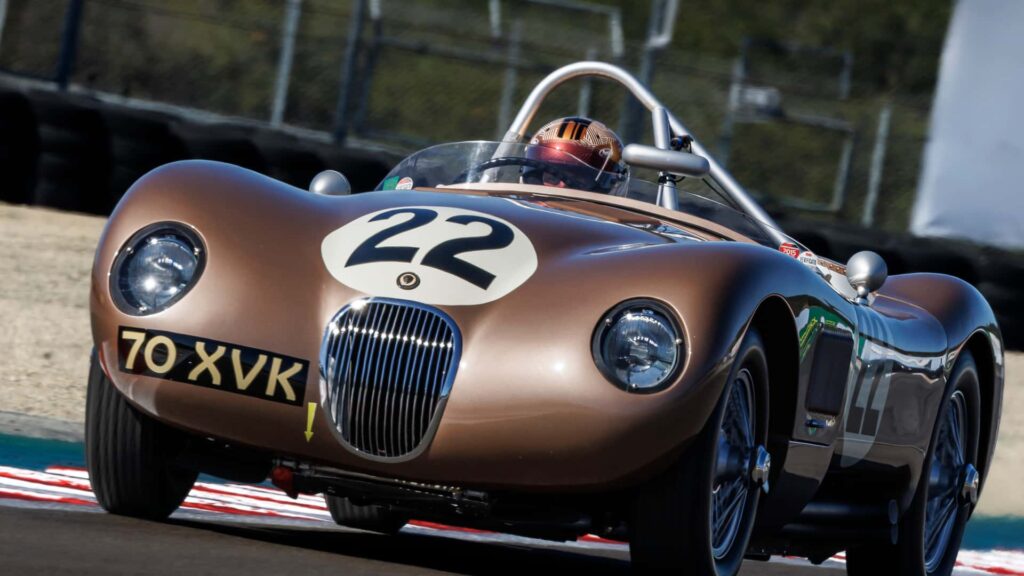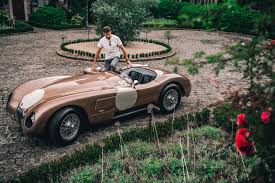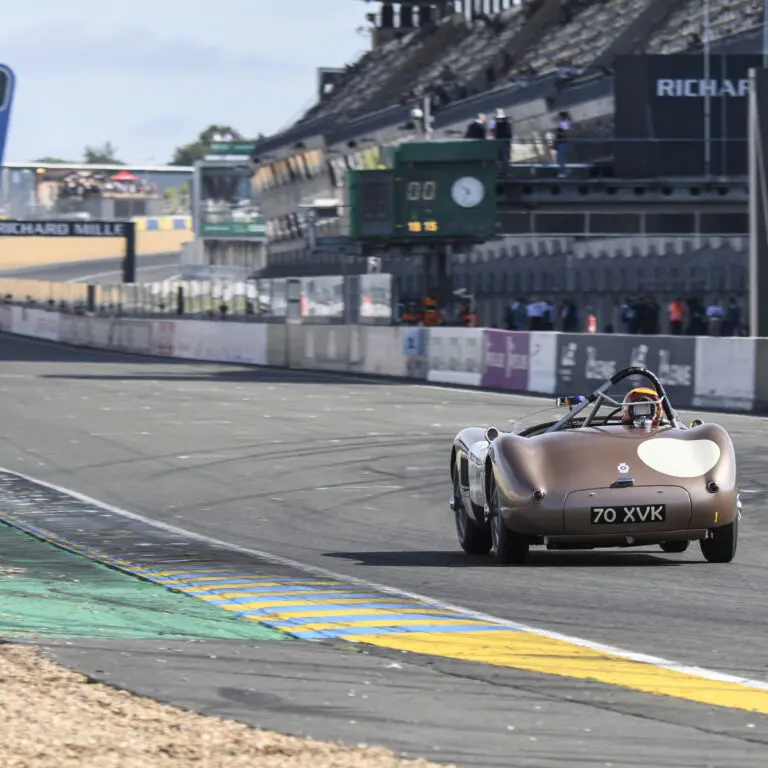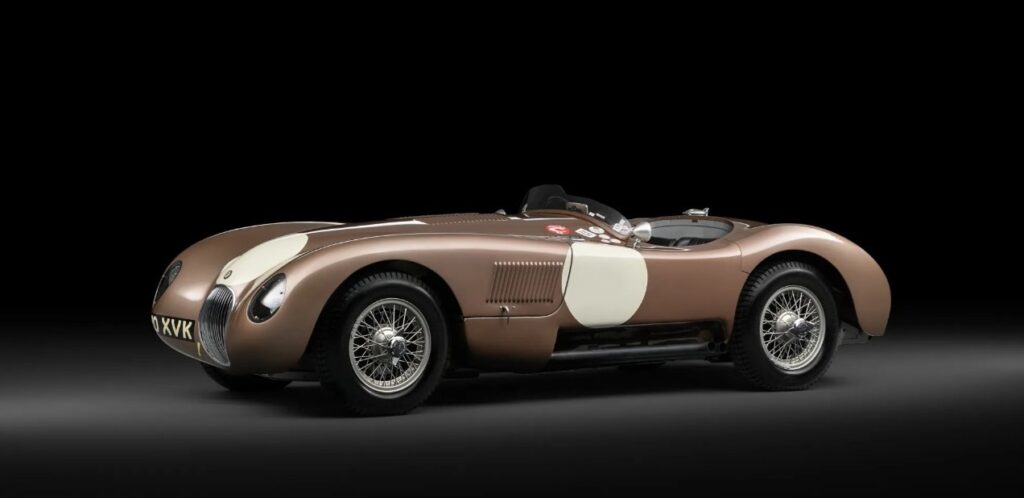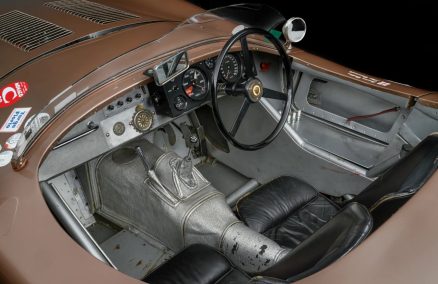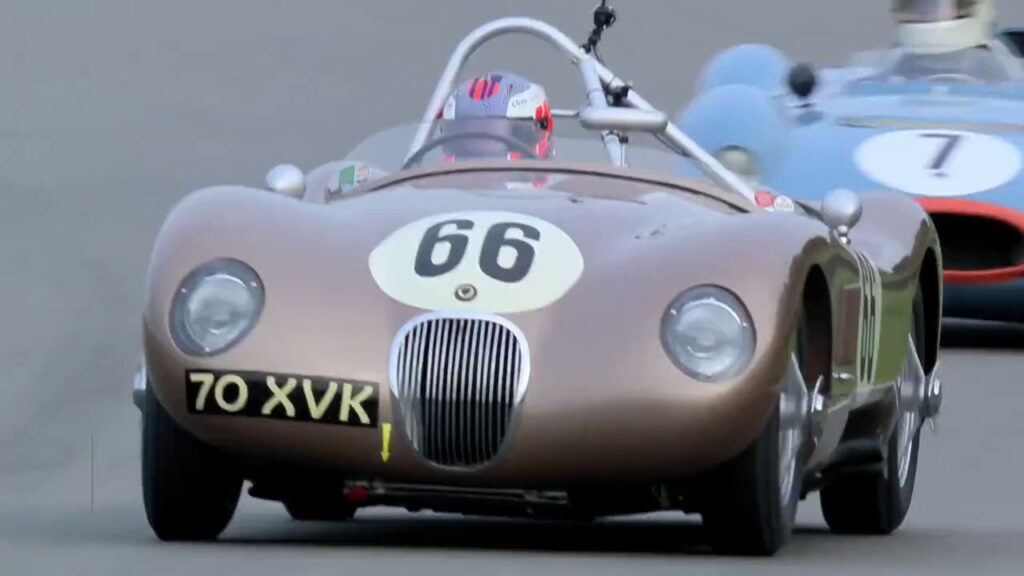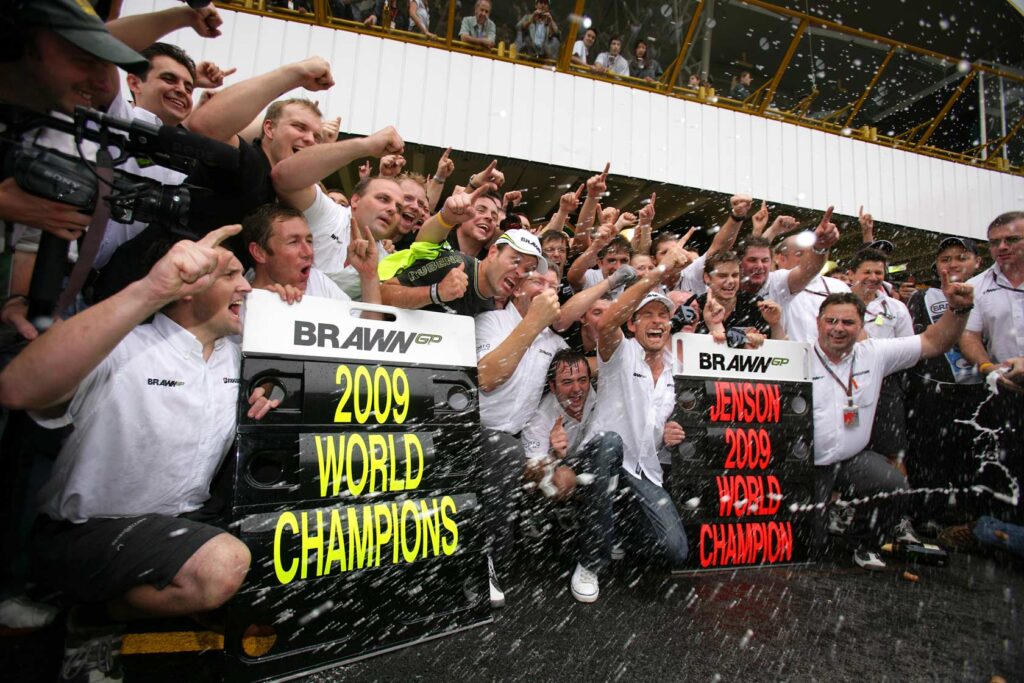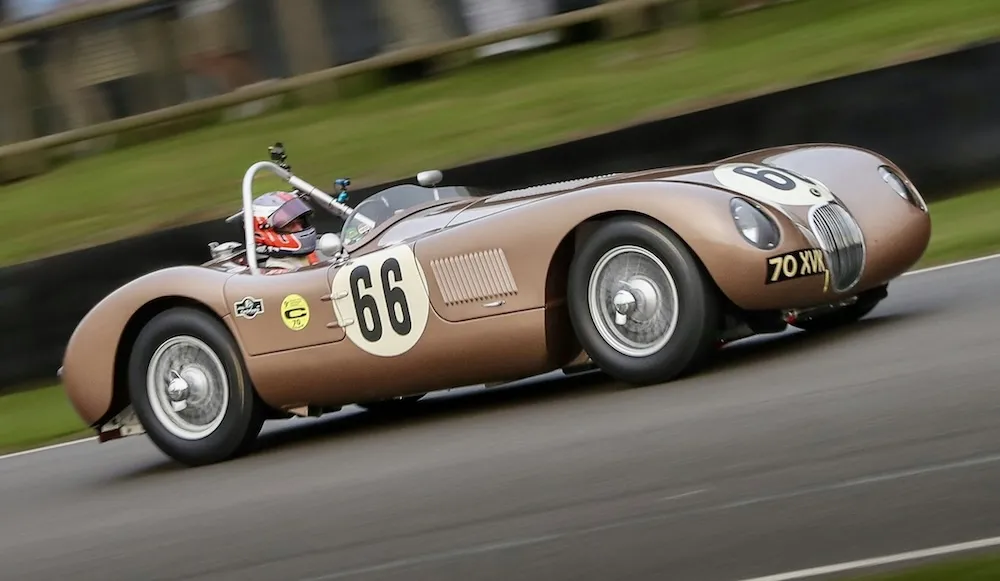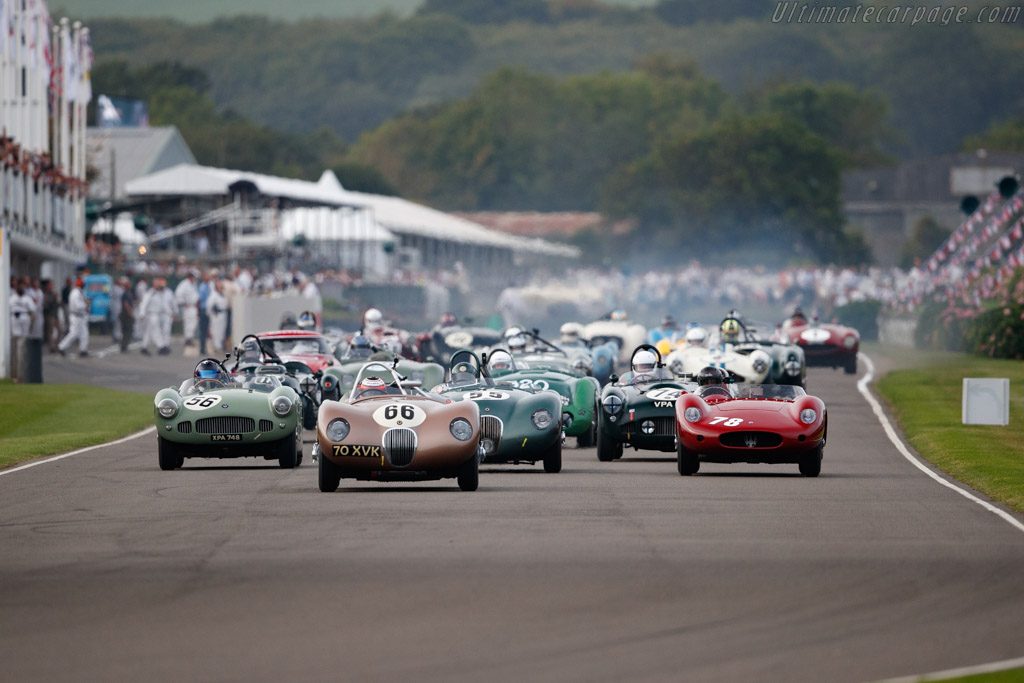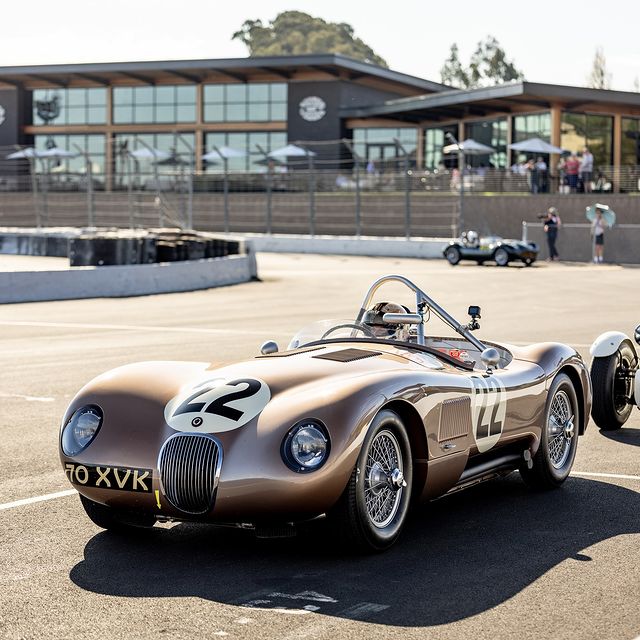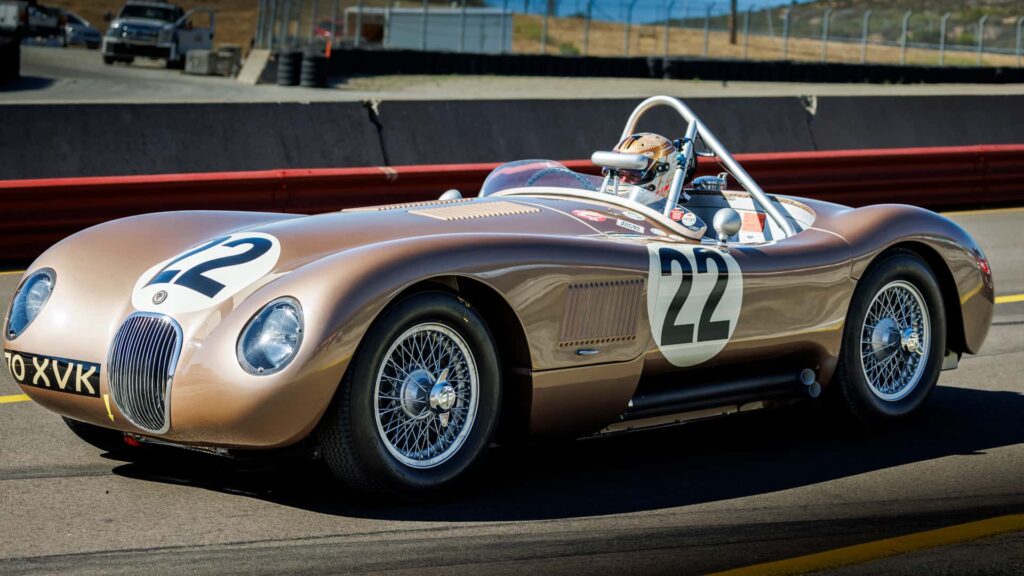
Every Jaguar C-type is special, but few cars can claim to have had Formula 1 champions as both its first owner and its current one, from many decades apart. This particular C-type, chassis XKC018, is believed to have been originally supplied to Juan Manuel Fangio, and raced extensively across South America. Despite the arduous nature of motor sport in this area of the world, the car retains its matching-numbers body panels and engine. In the 1980s it was re-discovered and brought to the US by Bill Tracy, where it was restored and shown at the Pebble Beach Concours d’Elegance. In 2012 it took part in the Mille Miglia as part of a Jaguar Heritage Works entry, and it has competed at the Monaco Historique and the Le Mans Classic, too. It was also driven by Chris Harris in the Italian classic event, a video about which you can watch on YouTube. The car is now owned by 2009 Formula 1 World Champion Jenson Button, taking pride of place among a varied collection of rare cars.
https://concoursonsavilerow.com/cars/1952-jaguar-c-type/
Some history – The C-Type of Two World Champions
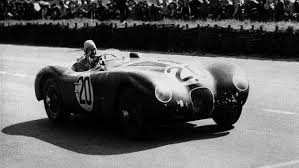
This Jaguar C-Type #XKC-018 was purchased new by 5-time Formula 1 world champion Juan-Manuel Fangio (image , right) and raced extensively in Argentina in her early years by local Jaguar distributor Jose Millet. Conserved in incredibly original state over the years, she is now being offered from the collection of another F1 world champion after many years of successful historic racing.
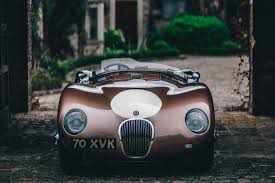
Having spotted XKC 018 at the 1952 Belgium Motor Show, the legendary Argentinian racing driver remarked “very nice, very nice!”. The sale concluded was a publicity coup for Jaguar, who even let the car go for half the sale price of $6000! Dispatched on October 27th 1952 and distributed through the Belgian Motor Company, she was the only C-Type specified in bronze metallic, over silver trim. Fangio’s name appears in early-dated Argentinian documents on file, as well as on a copy of the car’s Experimental Department road test report dated October 1st, 1952.
It was no wonder Fangio fell in love with the C-Type. Already a Formula 1 world champion with Alfa Romeo in 1951, one can imagine a man so consumed by the pursuit of speed would be enthralled by the idea of owning a Le Mans-winning and highly experimental endurance racer. The C-Type’s competitiveness and reliability made it the ideal sports-racer and demand far exceeded supply, which Jaguar manipulated by putting its marquee sports-racer in the hands of marquee drivers first. As John Bentley in his 1957 “Jaguar Guide” recalls, “if you happened to be named Farina or were a world champion, your chances were good of getting one”. Fangio was one such beneficiary of this method, reportedly acting as an intermediary for Argentinian Jaguar distributor Jose Millet to get his hands on Jaguar’s latest greatest sports car.
One might think it is a shame not to have witnessed perhaps the greatest race driver of all time compete in a C-Type in period, but that feat would have unfortunately not been possible in any case, as Maserati declined to allow their new for 1953 star driver to race in a rival’s car. It is therefore unclear exactly how long XKC018 was officially in Fangio’s possession, although the C-Type hastily boarded a ship for Argentina after the sale and passed to Millet of Buenos Aires with whom it would start an active South American racing career.
At this point the car was repainted in red and white and Millet first raced the car on 21st June 1953 at the Autodromo General San Martin, placing 3rd, then sporadically entering her in further local races. For 1954, 1955 and 1956, alongside a few local race entries, XKC 018 participated in the 1000 Km of Buenos Aires, the Argentinian round of the World Sports Car Championship, although the car was never able to finish the race due to various mechanical issues. By 1956, the C-Type was starting to get outclassed by the more powerful and advanced Ferrari 375 and Maserati 300S, pushing Jose Millet to sell her on to another Argentinian racing driver, Jorge Magnasco, who briefly raced her in further local events. By 1961, after passing back through the hands of Jose Millet, XKC018 had been sold to Ernesto Tornquist who had the car painted in a similar colour to the by then famous Ecurie Ecosse cars.
The car remained in Argentinian ownership right up until 1983 when she was purchased by American collector Bill Tracy of Virginia, who painstakingly had the car shipped to the Washington D.C. area. It was only a few months after purchasing it that, to his great surprise, Bill found out XKC018’s first owner was the great Fangio! It was a recurring occurrence for many European race cars in the Land of the Pampas to suffer ignominious fates, gaining strange engines and even stranger bodywork to keep them competitive on ever-smaller budgets. This was not the case of XKC018, as Tracy remarked that the car was kept in remarkably original and intact condition as she finally rolled off the transporter, 5 months after he had purchased the car. Bill Tracy embarked on a ground up restoration, repainting the car in red this time and using it sparingly over the following 14 years.
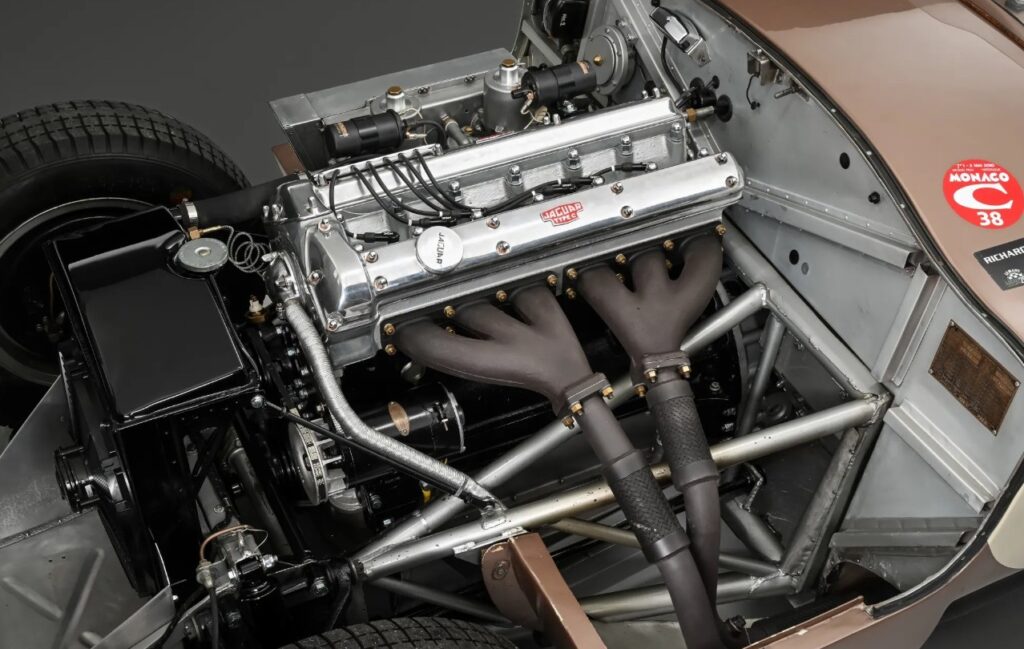
In 1997, XKC018 was sold to ex-Scuderia Centro Sud racing driver Giorgio Acutis who returned the car to her original bronze paint and entered her in her first Mille Miglia, before going to Bruce Lustman of Denver, Colorado in 2001. Bruce and his son James took the car to Pebble Beach in 2002 and were also the first to take the C-Type back to the race track, campaigning her in historic events such as the Monterey Historic Meeting, starting a very long and successful historic racing career for 018. In 2007, she was acquired by noted collector Bill Ainscough, returning to the UK for the first time since 1952. Thankfully, the Lustmans had gone to great lengths to securely keep all of the car’s original components, body panels and original engine (E1018-8) while racing her, which were all reunited with the car by marque experts CKL Developments.
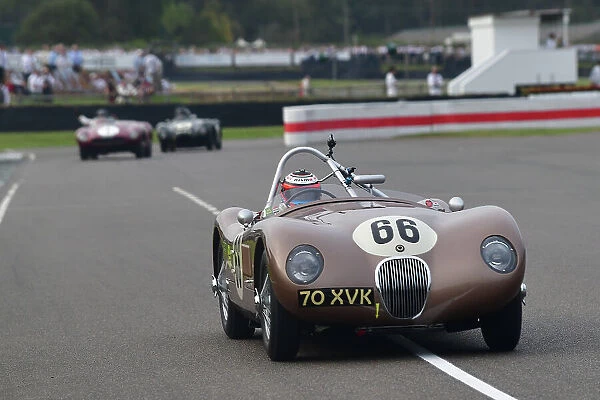
Her historic racing career continued from strength to strength, with participation in all of the great European events and earning Fangio’s C-Type the reputation of being one of the fastest C-Types on the grid anywhere, securing multiple wins at events such as Le Mans Classic, Monaco Historique, Spa Six Hours and Silverstone Classic. In 2016, XKC 018 passed on to her second Formula One World Champion, Jenson Button, who continued to campaign the car around Europe, having most recently raced it himself at the 2023 Goodwood Revival, 2024 Rolex Monterey and Velocity Invitational historic races.
https://www.fiskens.com/cars-for-sale/1952-jaguar-c-type/13826
Read our story of mid-2024 when it was announced that Jenson Button would compete with us in the Rolex Monterey… https://dmtrg.com/jenson-button-to-rolex-monterey-2024/
Specifications – The C-Type
The Jaguar C-Type (officially called the Jaguar XK120-C) is a racing sports car built by Jaguar and sold from 1951 to 1953. The “C” stands for “competition”. The car combined the running gear of the contemporary, road-proven XK120, with a lightweight tubular frame designed by Jaguar Chief Engineer William Heynes, and an aerodynamic aluminium body, jointly developed by William Heynes, R J (Bob) Knight and later Malcolm Sayer. A total of 53 C-Types were built, 43 of which were sold to private owners, mainly in the US.
The road-going XK120’s 3.4-litre twin-cam, straight-six engine produced between 160 and 180 bhp (134 kW). The C-Type version was originally tuned to around 205 bhp (153 kW). The early C-Types were fitted with SU carburettors and drum brakes. Later C-Types, produced from mid 1953, were more powerful, using triple twin-choke Weber carburettors and high-lift camshafts. They were also lighter, and braking performance was improved by using disc brakes on all four wheels. The lightweight, multi-tubular, triangulated frame was designed by Heynes. Heynes, Knight and Sayer together developed the aerodynamic body. Made of aluminium in the barchetta style, it was devoid of road-going items such as carpets, weather equipment and exterior door handles. According to the Jaguar Heritage Registry, the cars were produced between May 1952, starting with XKC001, and ending in August 1953 with XK054. The original alloy body was marked with the prefix K (e.g. K1037).
https://en.wikipedia.org/wiki/Jaguar_C-Type
Race History – The C-Type
The C-Type is regarded as one of the most important models in Jaguar’s history, having won Le Mans in 1951 in the hands of Peter Walker and Peter Whitehead, and again in 1953 with Duncan Hamilton and Tony Rolt. Chassis XKC018 was purchased in October 1952 by Fangio, who had won his first title the previous year, via Jaguar’s Belgian agent. The car was subsequently shipped back to his native Argentina, and having passed through the local importer it was raced by other drivers for several years. In the 1980s it was purchased and restored by American Bill Tracy, before heading to Europe. It took part in the Mille Miglia recreation in 2012, and was subsequently raced regularly in events such as Le Mans Classic and the Grand Prix de Monaco Historique before being acquired by Button. The car is regarded in historic circles as being very original, having retained its factory engine and transmission. “My beauty’s prior owner was the exceptional Juan Manuel Fangio who dominated F1 in the 1950s by winning five World Championships,” Button wrote on Instagram. “He bought XKC018 as a road car, she’s the only bronze Jaguar C-type produced by the factory. Cool, right?
https://www.autosport.com/historics/news/button-set-to-race-fangios-personal-jaguar-at-goodwood/10514864/
Value – The C-Type
When new, the car sold for about $6,000, approximately twice the price of an XK120. In an article in the 11 June 2003 issue of Autocar magazine (“Slick Cat Jaguar”, p. 70) the value of a “genuine, healthy” C-Type is estimated as £400,000, and the value of the 1953 Le Mans winner is about £2 million; replicas are available from a variety of sources from £40,000. A C-Type once owned and raced by Phil Hill sold at an American auction in August 2009 for $2,530,000 and another C-type was sold at the Pebble Beach auction in 2012 for $3,725,000,[6] Recently an unrestored C-Type that raced at Le Mans has sold for £5,715,580, during the Grand Prix Historique race meeting in Monaco. In August 2015, an ex-Ecurie Ecosse Lightweight C-type, chassis XKC052 and the second of only three works lightweights, driven by Peter Whitehead and Ian Stewart to fourth at the 1953 Le Mans 24 Hours, fetched $13.2 million (£8.4 million) at auction in California.
For the chassis numbers of Jaguar C-Types please see https://www.conceptcarz.com/s11927/jaguar-c-type.aspx
Jenson Button to Rolex Monterey 2024
2009 FIA Formula One World Champion to Race his Ex-Fangio Jaguar C-Type
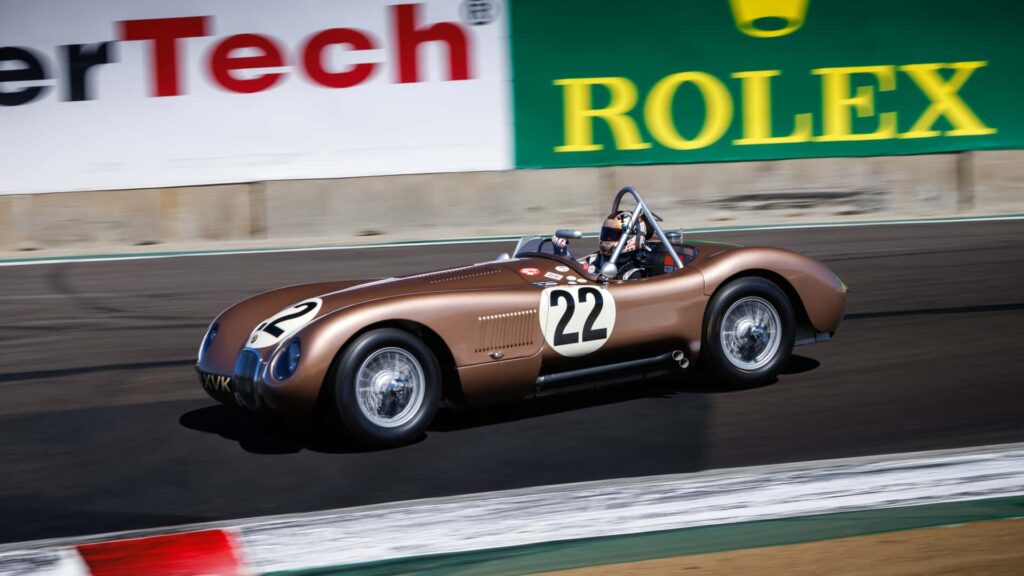
MONTEREY, Calif., June 27, 2024 — The competitive fire never diminishes in world-class athletes. Discontented sitting on the sidelines, 2009 FIA Formula One World Champion Jenson Button returns to the Rolex Monterey Motorsports Reunion Aug. 14-17 not to sit idly by, but to race his 1952 Jaguar C-Type that was originally owned by six-time World Champion Juan Manuel Fangio. “Button visited last year to enjoy the racing, and we are very excited to see him hustle his storied Jaguar C-Type around the track and down the Corkscrew.” From his debut at the 2000 Australian Grand Prix to his last race at the 2017 Monaco Grand Prix, Jenson Button’s Formula 1® career was filled with success: 15 Grand Prix victories, 50 podiums, and the ultimate prize of being World Drivers’ Champion in 2009. The British driver is now applying his skills to endurance and classic races. In 2023, he participated in three NASCAR (National Association for Stock Car Auto Racing) races and started the centenary edition of the 24 Hours of Le Mans in a NASCAR entry.
“I love racing, it doesn’t matter in what form,” said Jenson Button. “I’ve raced everything from F1 cars to Trophy trucks in the desert. What I love about historic racing is how mechanical the cars are, you feel at one with it, and you have to treat it with respect. I’ve only raced my C-Type at Goodwood so far so I can’t wait to add Laguna Seca to that short list of historic race tracks.” Button adds, “The Rolex Reunion is such a special event celebrating beautiful machinery and catching up with good friends. I look forward to it.”
Button brings a very historic Jaguar C-Type oozing with patina. Sold to its first owner, racing driver Juan Manuel Fangio in 1952, this C-Type (commonly referred to by its chassis number XKC 018) was soon after shipped to Argentina where it was sold to Jose Millet. From there Millet campaigned the car extensively at events throughout the 1950s in South America including the 1955 and 1956 1000km of Buenos Aires.
At the 2024 Rolex Monterey Motorsports Reunion Aug. 14-17 Jenson will be pitted against the Laguna Seca regulars like two Lola Mk 1s, Chris MacAllister in his 1955 Jaguar D Type, several Jaguar XK120 sports cars, more than one Le Mans Lotus 11 and 17, a 1958 Lister Knobbly, 1955 Elva Mk I, 1957 Maserati 200, 1960 Balchowsky Ol’ Yaller IX, an Allard, a Scarab and some of the California Road Race specials which took the fight to the Europeans at the Pebble Beach road races of the 1950s… the 1950 white Parkinson Jaguar Special driven by John Buddenbaum, Rob Manson’s 1949 dark blue Baldwin Mercury Special and Marcus Bicknell driving Rob’s yellow and silver 1952 Streets Manning V8 Special.
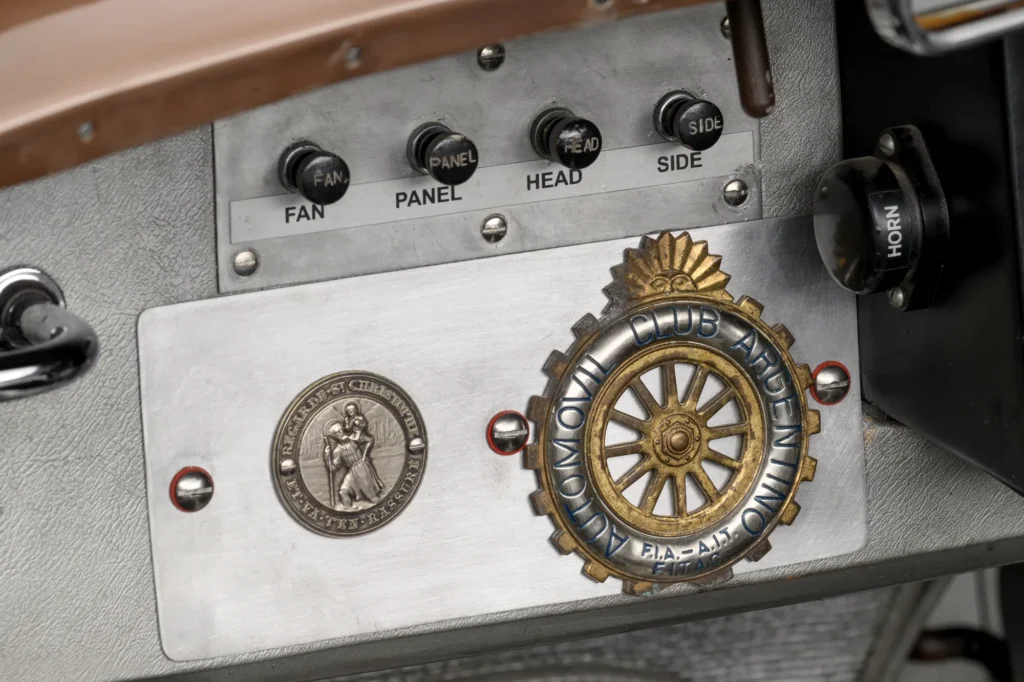
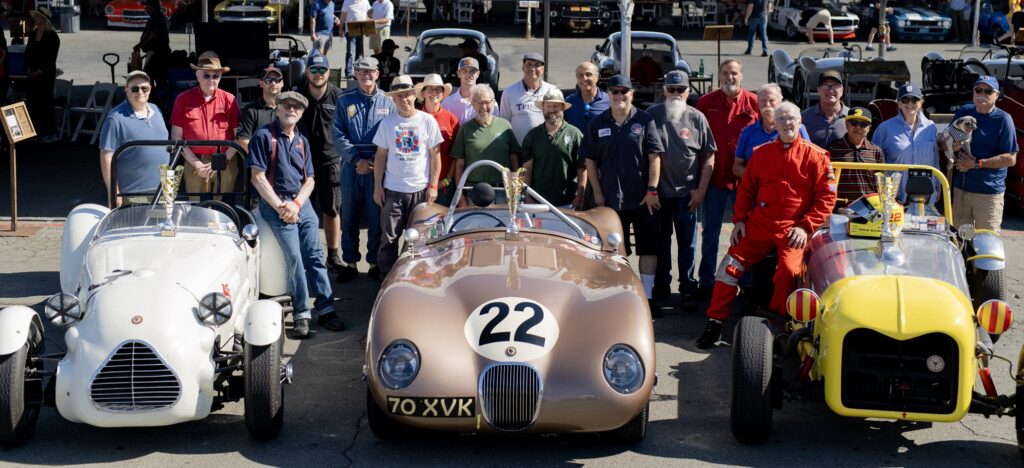
Jenson Button also raced this Jaguar C-Type at the Velocity Invitational at Sonoma in October 2024 and won the feature race, beating the other Pebble Beach race cars of the Del Monte Trophy Race Group. Don’t miss the movie of this race on our home page and at https://youtu.be/9wvEG-qwfKE?list=UUvQnXJzL_xIyDEre86KlHBA
Other links
https://dmtrg.com/jenson-button-to-rolex-monterey-2024/